

Wichita BNR Improvements | Wichita, Kansas
How PLATE GIRDER® Formwork Handled 1,800 PSF on a Wastewater Project
Wichita, Kansas
A Cleaner Future for Wichita
The Wichita BNR Improvements project is a major upgrade to the city’s wastewater treatment plant. By expanding biological nutrient removal capacity, the plant will discharge less nitrogen and phosphorus into local waterways, protecting downstream ecosystems for decades to come. The structure is a large rectangular basin divided by a dense grid of interior walls that reach 30 feet (9.1 m) tall. Between the elevated pour pressures, the complex geometry, the watertight finish required for wastewater service, and the multi-year schedule, the project demanded a formwork system that could perform reliably under every condition.
A Trusted Partnership, Tested by a Tough Mix
This project was built by Dondlinger & Wildcat, a joint venture between two experienced contractors. Wildcat Construction has used EFCO formwork on water and wastewater jobs before, so the joint venture knew the systems would perform on a project of this size and duration. The team picked EFCO again for a specific reason this time. The combination of an unusually slow-setting concrete mix and 30-foot (9.1 m) wall heights drove the need for a higher pour-pressure rating than typical wall forms provide. The forming package combined High-Strength PLATE GIRDER® for the main walls, RAPID CAST® for the stairwell next to the existing clarifier, and E-Z DECK® with Bridge Overhang Brackets for the walkways on top of the interior walls. Forms were delivered on the site in late January 2025, and structural work lasted more than a year.
Engineered for Elevated Pour Pressures
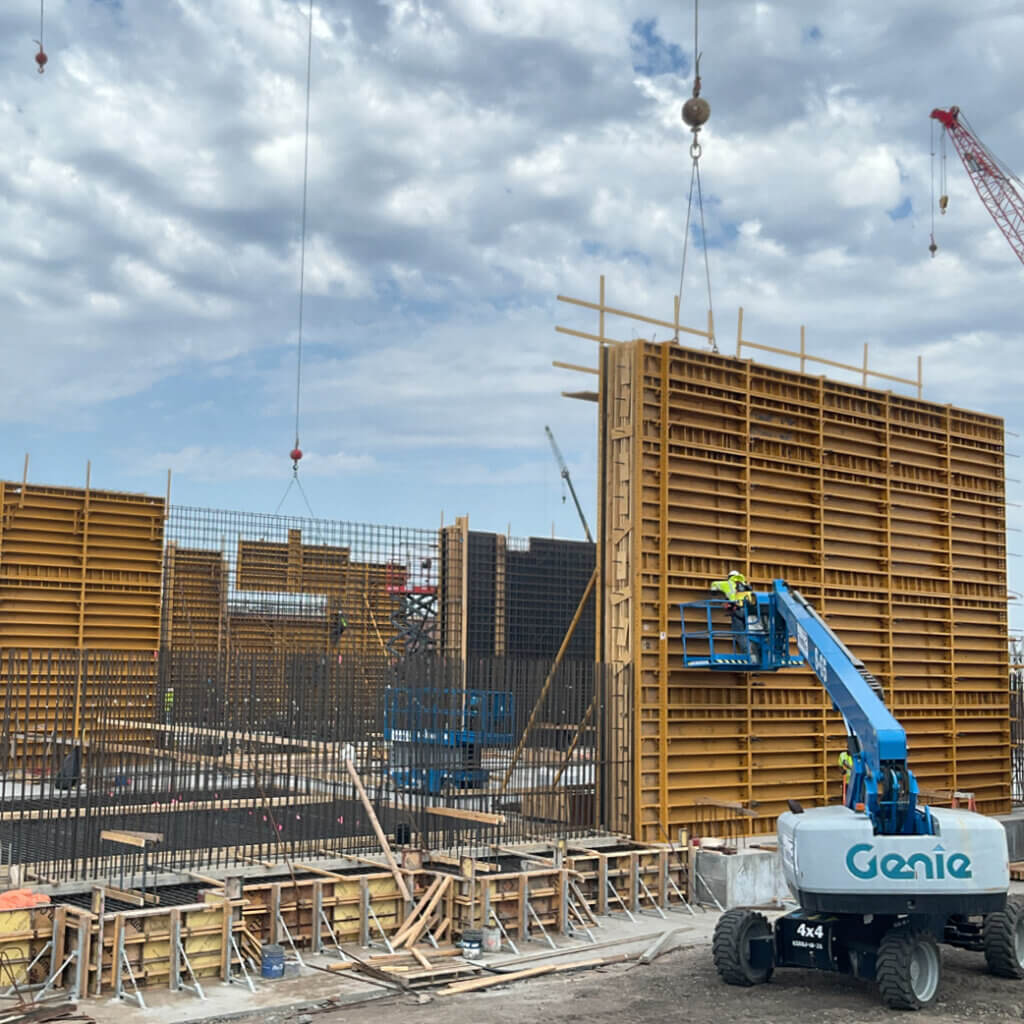
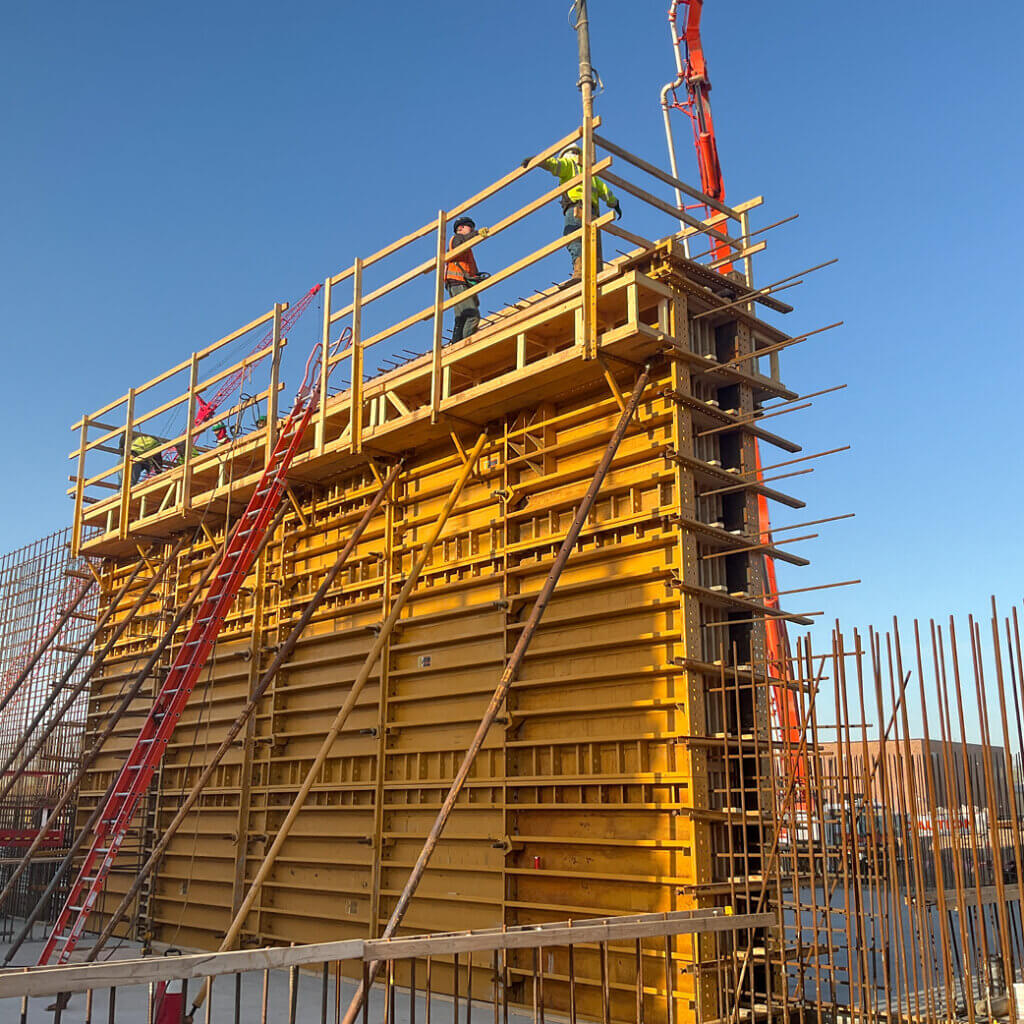
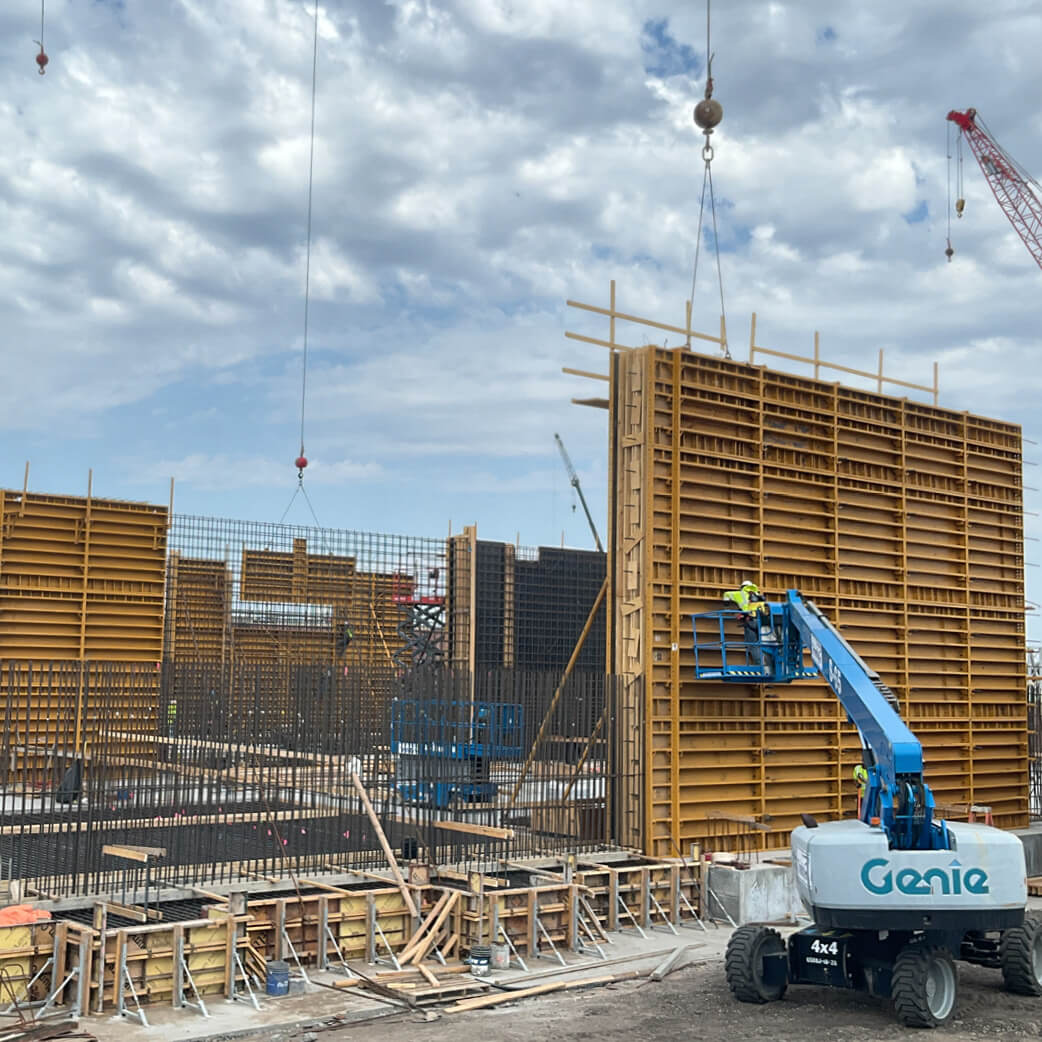
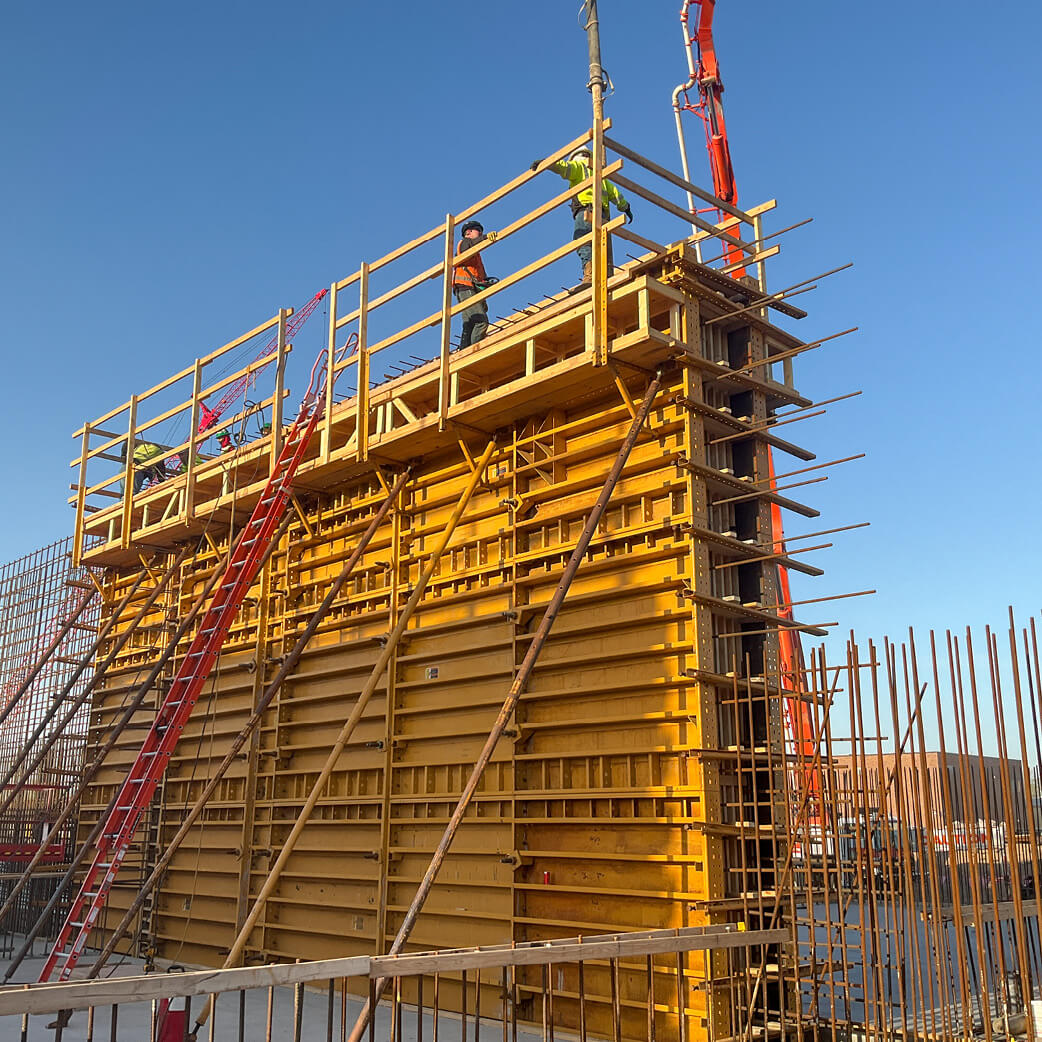
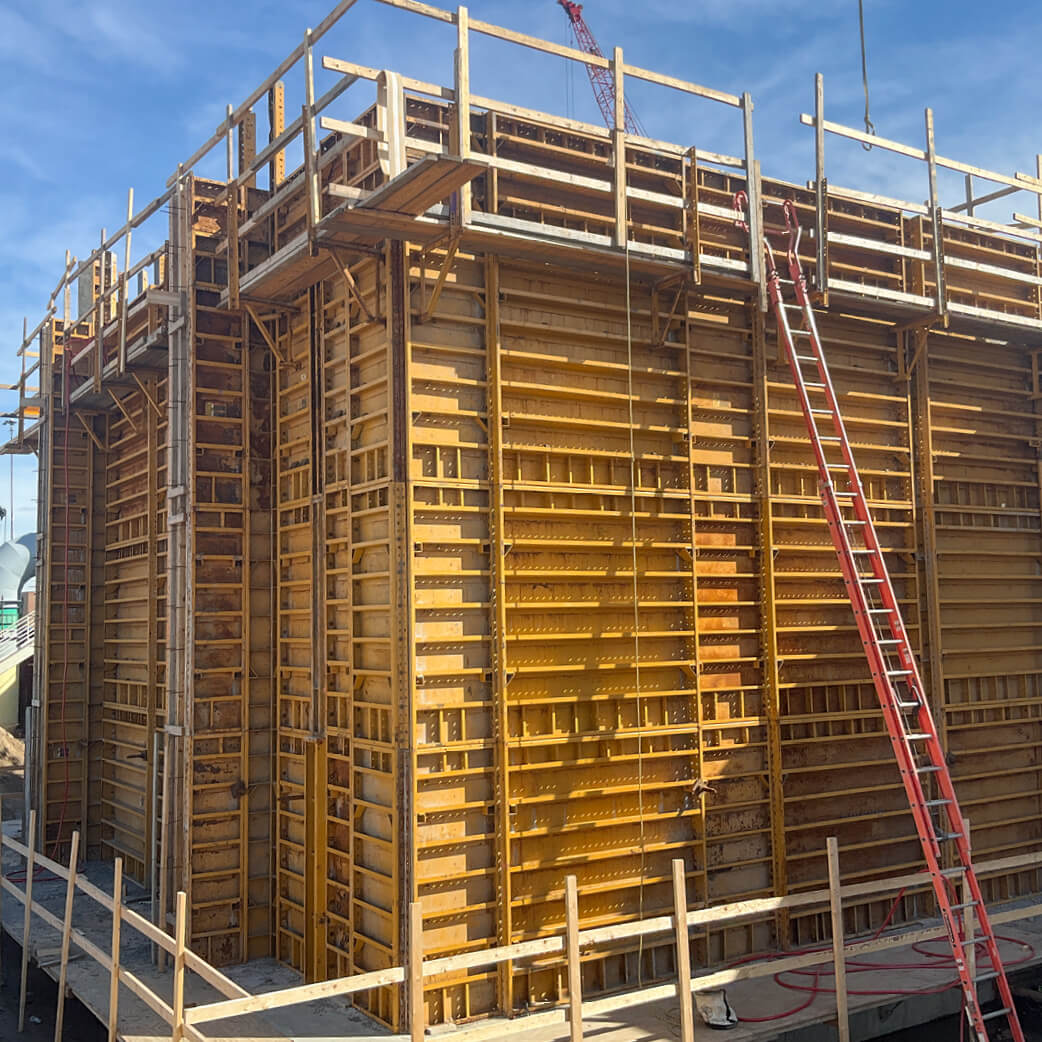
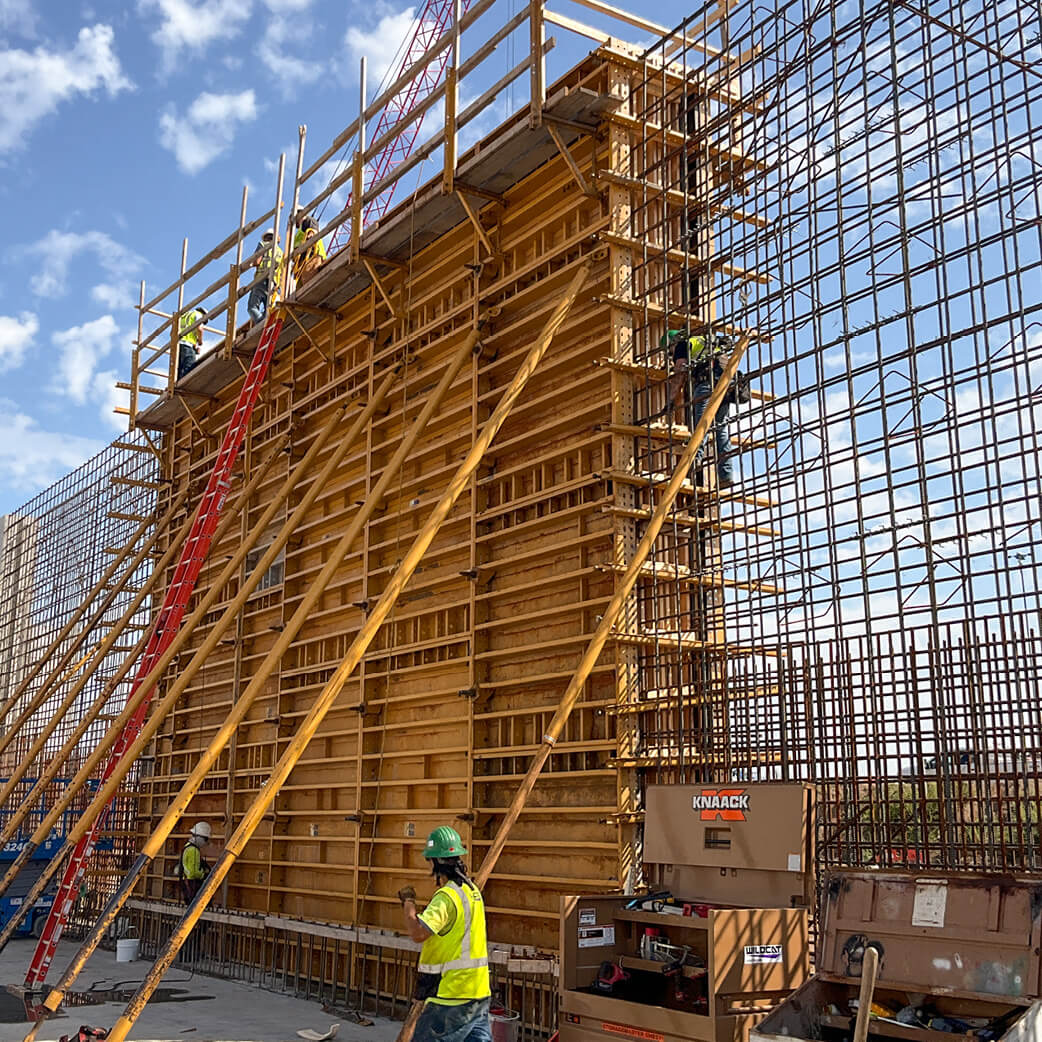
High-strength PLATE GIRDER® anchored the entire operation. The key engineering decision was to rate the system at 1,800 PSF (pounds per square foot) (86 kPa).
The walls were demanding: heights up to 30 feet (9.1 m), individual pours up to 30 feet (9.1 m) long, and thicknesses ranging from 1 foot to 2 feet 8 inches (0.3 m to 0.8 m). The concrete mix also set slowly, which limits how fast a wall can be safely poured.
Here’s why the rating mattered. At 70°F (21°C) with a slow-set mix (Cc of 1.4), a form design with a max pour pressure of 1,200 PSF (57 kPa) would limit the pour rate to about 6 feet per hour (1.8 m per hour), meaning at least 5 hours to fill a 30-foot (9.1 m) wall. Rating the system to 1,800 PSF (86 kPa) unlocks the ACI 347 maximum of 15 feet per hour (4.6 m per hour), dropping that same wall to roughly 2 hours. Multiply those savings across every wall on the project, and they add up to a meaningful reduction in labor hours and a clear gain in pour-day safety.
EFCO’s engineers hit the 1,800 PSF (86 kPa) rating by specifying compact Combination Bias Corners (CBCs) in each gang and tightening tie spacing only where pressures peaked, leaving the rest of the wall on a standard formwork pattern.
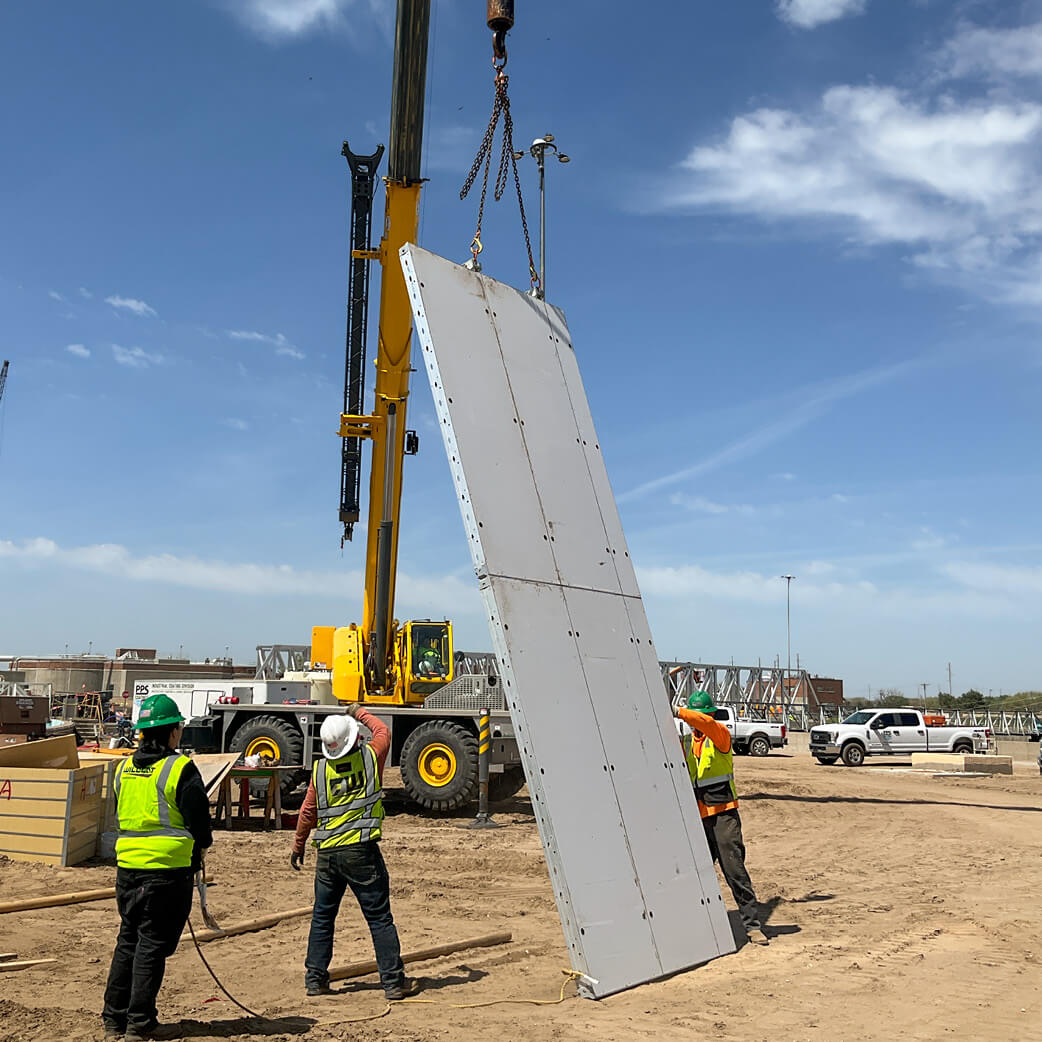
PLATE GIRDER®’s wide range of panel sizes did the rest. The engineering team specified the largest form area per tie the design pressure would allow, which meant noticeably fewer ties in the walls overall. The photos show a panel with ties spaced 8’ (2.4 m) horizontally and 4’ (1.2 m) vertically, for 32 SF (3.0 m²) per tie. And fewer ties mean fewer holes to patch and less finishing labor. These walls also used a she-bolt and inner rod assembly, the tie system typically specified on water treatment plant walls to prevent leaks. That makes the wide spacing even more valuable: every tie eliminated saves the cost of a consumable inner rod and the labor to set it.
The system also left a clean single-line joint and a smooth concrete face, which meant little patching or surface repair after the forms came down, so crews could strip each section and move on to the next pour without waiting on finishing work. It all adds up to the Lowest in-Place Concrete Cost (LIPCC).
Stacked Gangs Without a Compensation Whaler
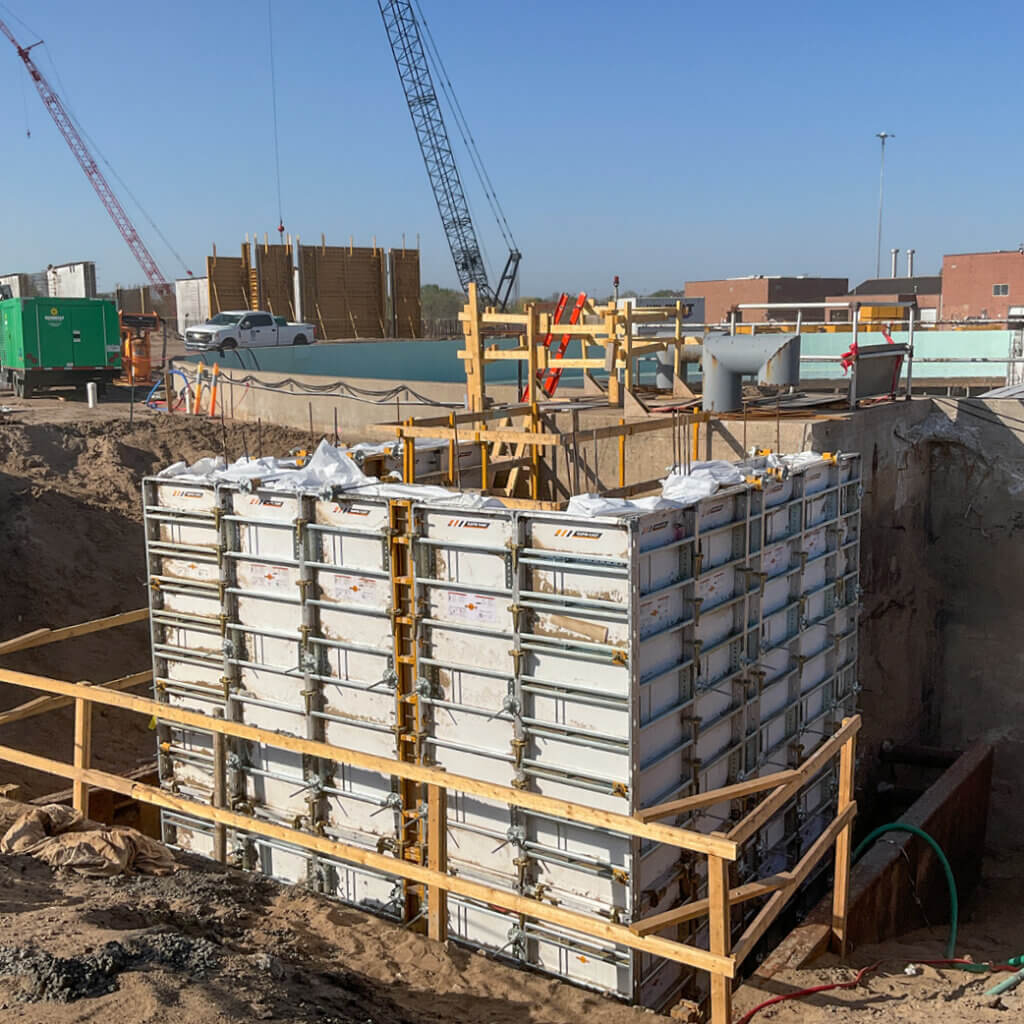
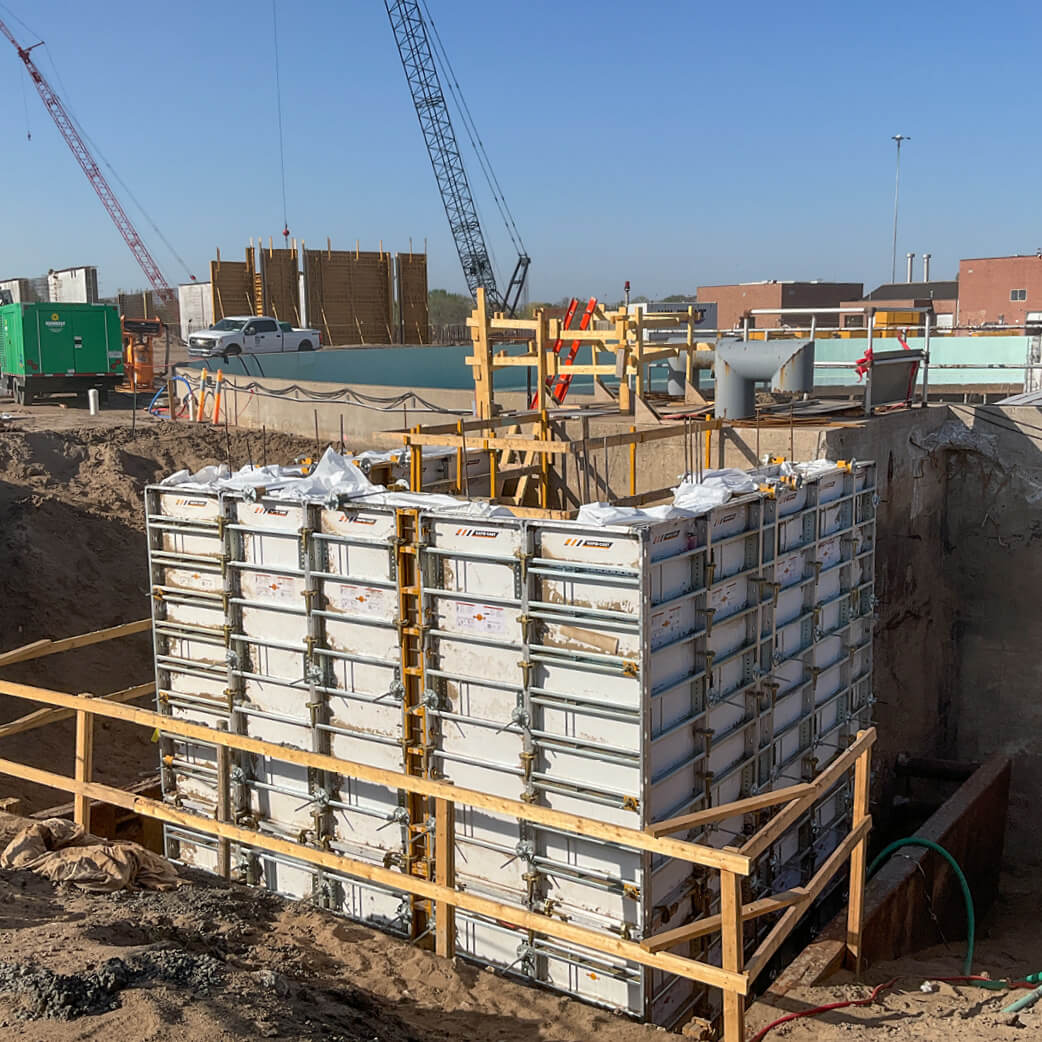
The stairwell was a project in its own right. EFCO’s RAPID CAST® wall forms handled it. The system’s design allows two nine-foot (2.7 m) panels to stack into an 18-foot (5.5 m) gang without a compensation whaler at the splice. That kept hardware out of the assembly, sped up the build, and let the crews fly each gang as a single pick instead of stacking in lifts. RAPID CAST® showed up elsewhere on the structure, too, wherever the fastest way to set forms was to fly a gang.
Forming Variable-Width Walkways on Top of the Walls
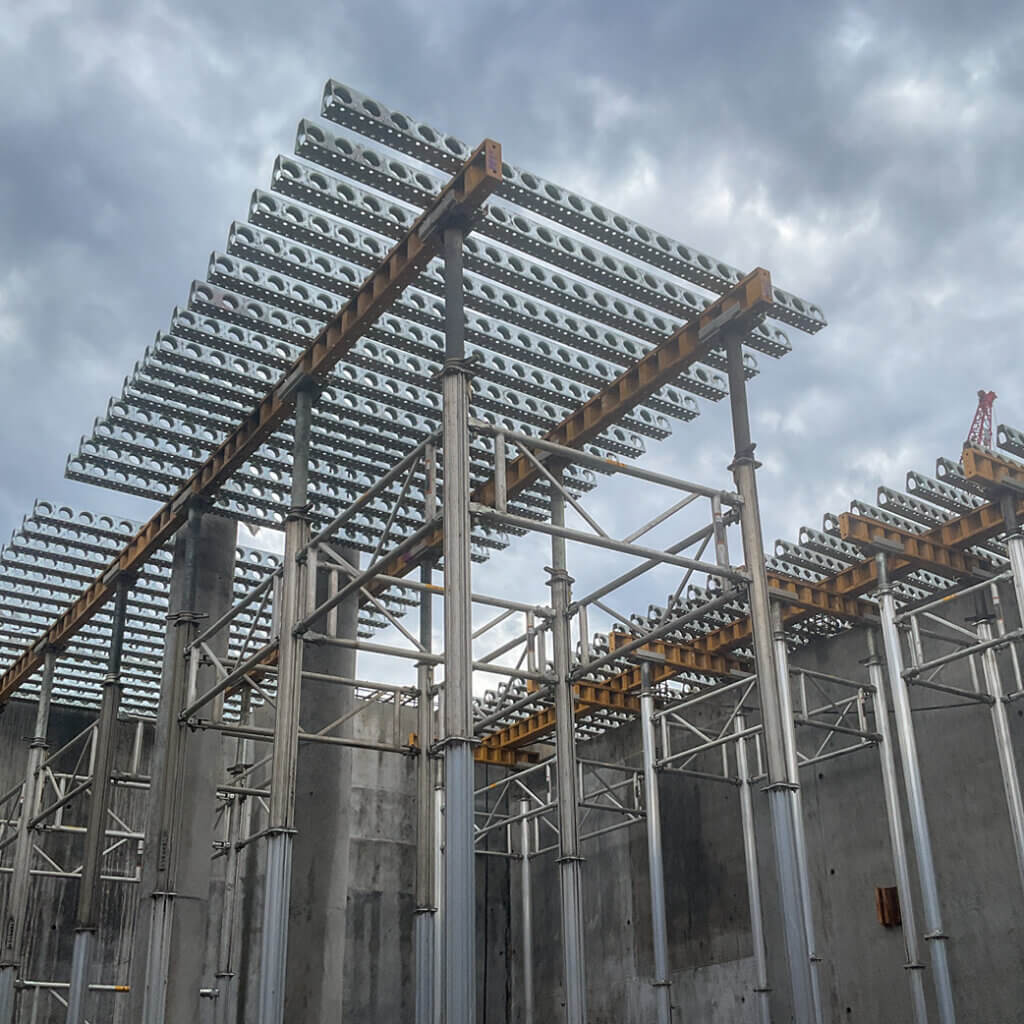
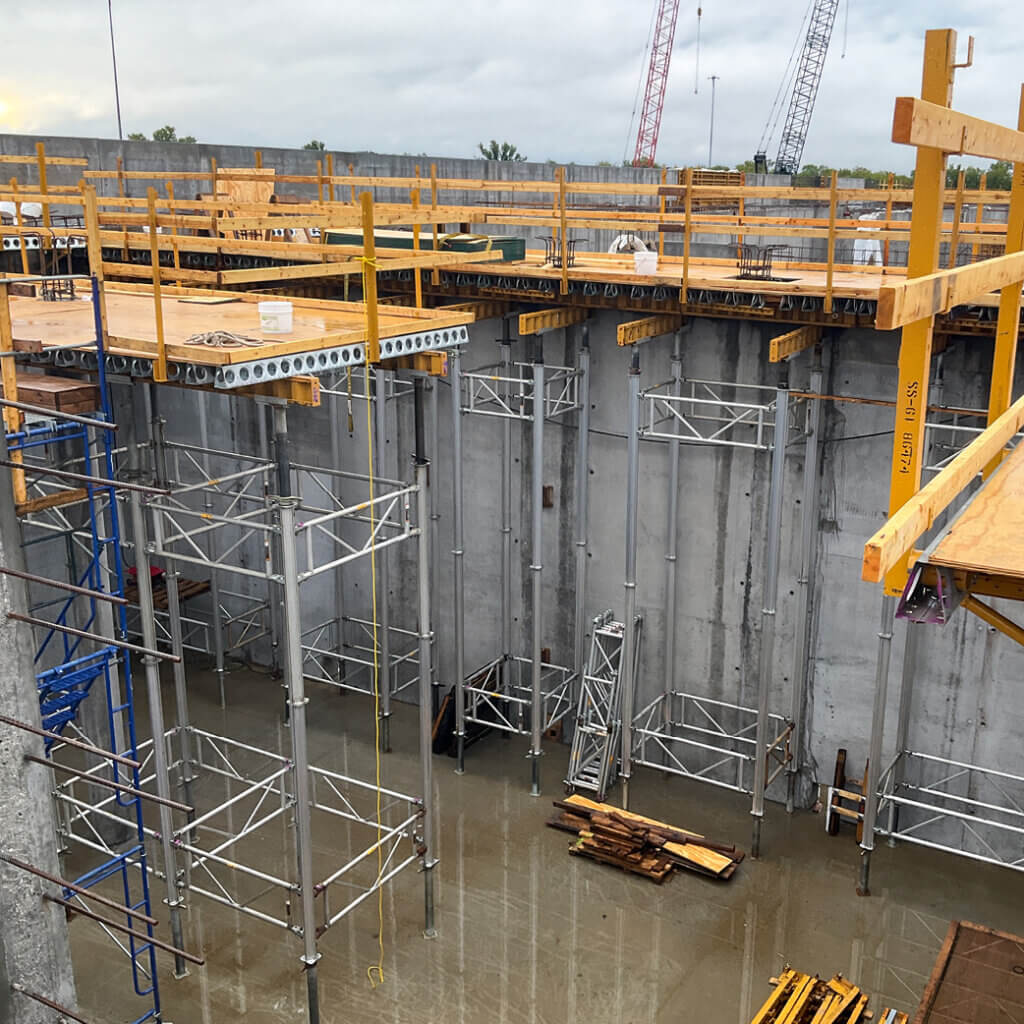
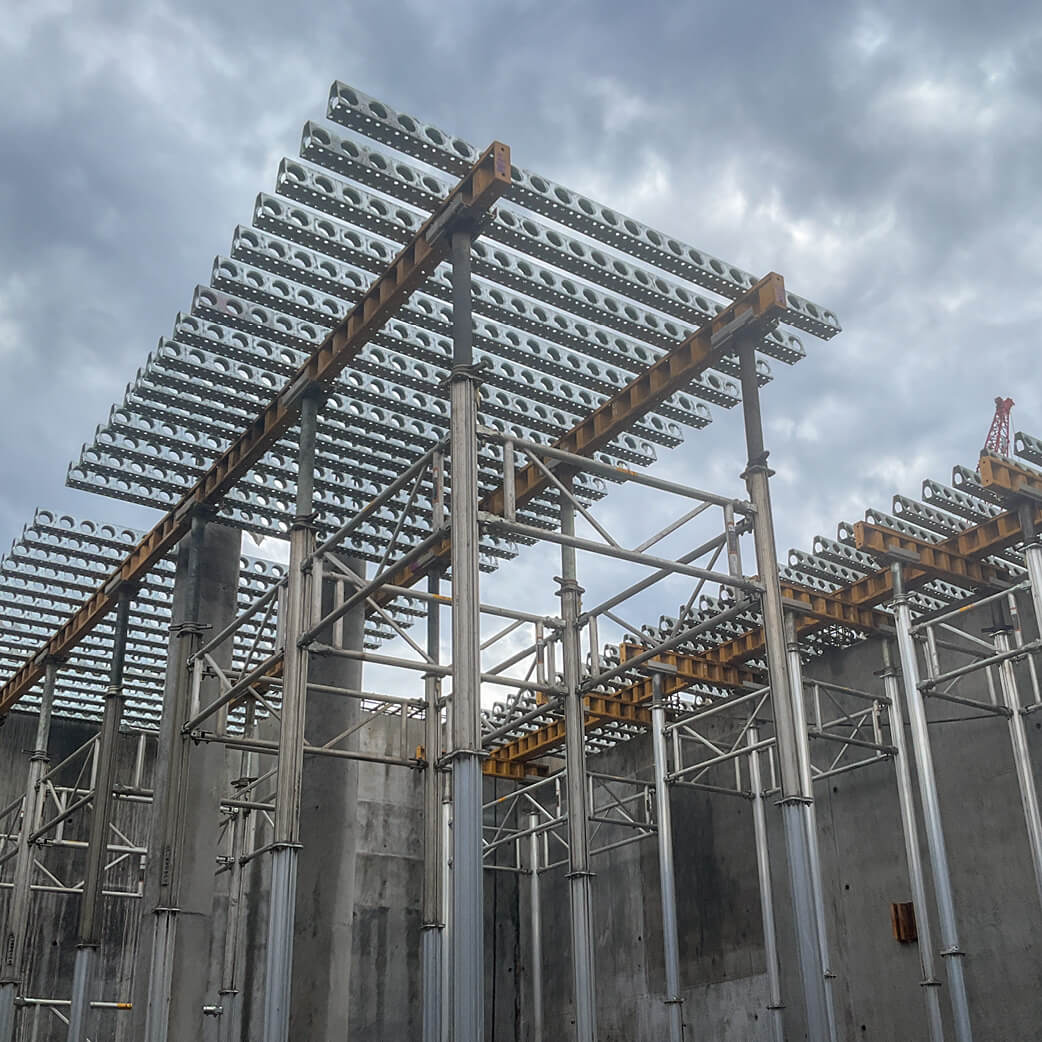
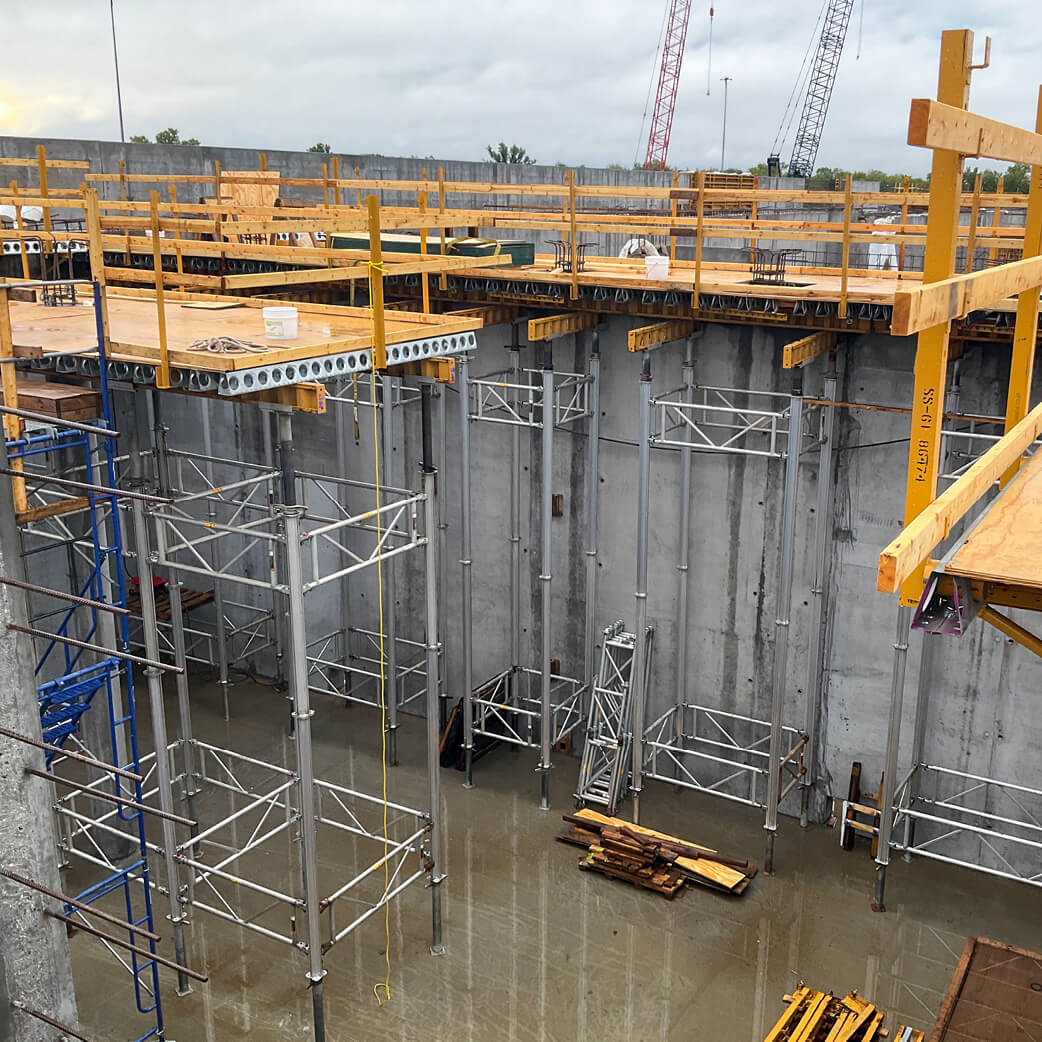
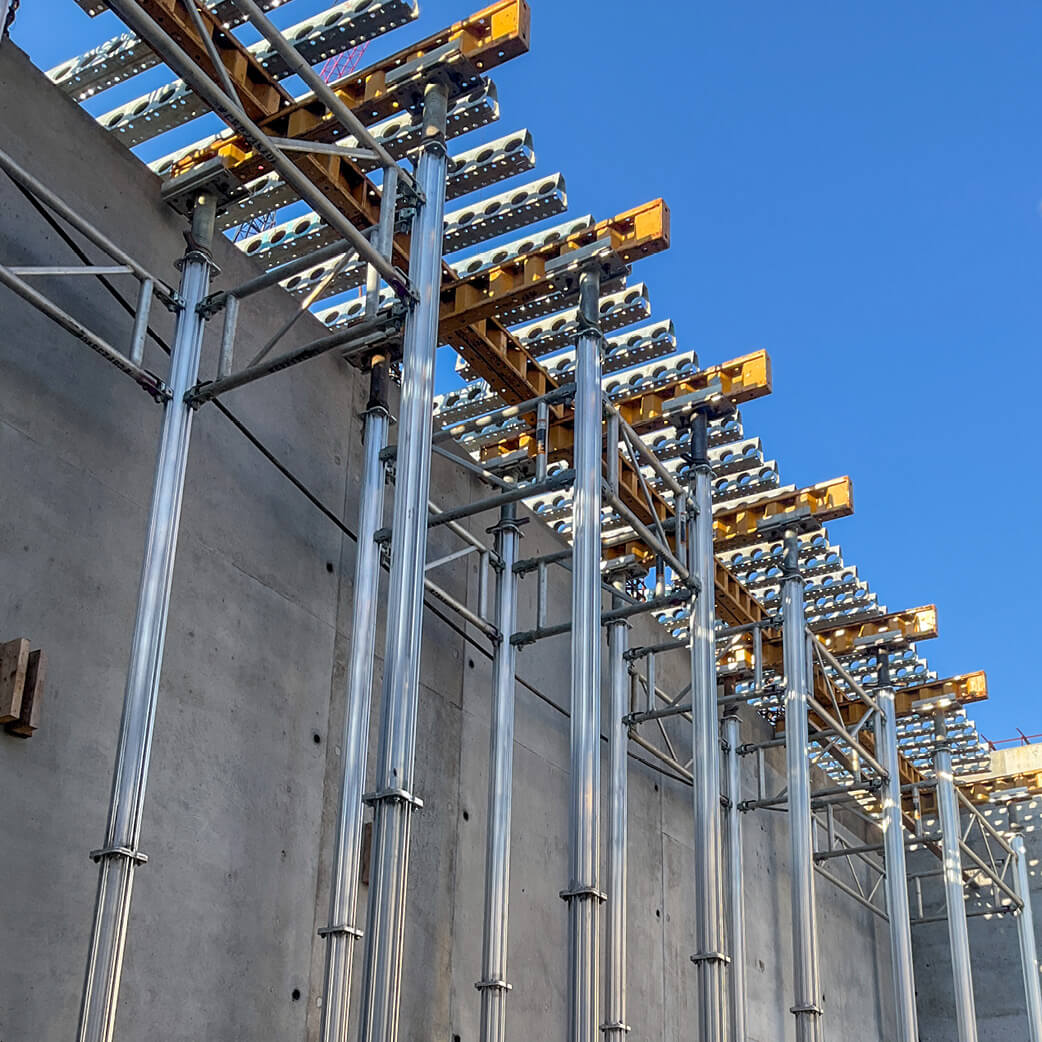
The design called for a cast-in-place walkway across the top of nearly every interior wall, with the width changing from one section to the next. Pouring the walls and walkways together would have driven up form pressures and added real risk at that wall height. So the crews poured the walls first, then came back to pour the walkways on top of the cured concrete. Two EFCO products handled the work side by side: E-Z DECK® in the heavier-load areas and Bridge Overhang Brackets in the lighter sections, where it was the more economical option. Because the walkway slab is only 10 inches (254 mm) thick, simple wood side forms closed the perimeter. EFCO’s territory manager, engineering, and field service teams remained engaged throughout the build, providing drawings, layouts, and site visits when the crews needed them.
Why Dondlinger & Wildcat Chose EFCO
For Dondlinger & Wildcat, this job took more than equipment—it took the engineering behind it. A higher-rated PLATE GIRDER® system handled the elevated pour pressures, RAPID CAST® let the crews fly the stairwell gangs as single picks, and EFCO’s territory manager, engineering, and field service teams stayed with the project from the first form set through more than a year of structural work.
Faster pours, fewer ties to patch, less rework, a smooth concrete face, and a treatment plant Wichita will rely on for decades. That is what Lowest In-place Concrete Cost (LIPCC) looks like.
JV Dondlinger & Wildcat Construction
Taylor Robillard, Senior Project Manager
Andy Gamble, Project Superintendent
Chris Betzen, Field Superintendent
EFCO FORMWORK SPECIALISTS – Des Moines/Chicago
Mike Bowden, Territory Manager
Matt Harrington, Field Supervisor
Nate Witte, Engineer
Project Photos
Trusted Formwork Partner
Why Trust Anyone Else?
We are ready to assist you in finding the best forming and shoring solutions for your construction projects.
