

Magnetawan First Nation Water Treatment Plant | Parry Sound District, Ontario, Canada
Clean Water for Magnetawan: Crane-Free Forming on a Rock-Bound Site
Magnetawan First Nation, Parry Sound District, Ontario, Canada
A New Water Treatment Plant for Magnetawan First Nation
A water treatment plant is about as basic as public infrastructure gets, and building one well is the difference between a system that serves a single generation and one that serves several. At Magnetawan First Nation, in Ontario’s Parry Sound District, roughly 37 mi (60 km) north of the town of Parry Sound, a new plant now draws raw water from the Magnetawan River and treats it through a membrane filtration system before it reaches homes across the community. The work replaced aging treatment equipment, added a new storage reservoir, and upsized the water main carrying treated water into the community. For the families served by it, the outcome is simple: dependable water at the tap. For the crews who built it, the site was anything but simple.
Why Rowland Concrete Services Needed a Different Kind of Wall Form
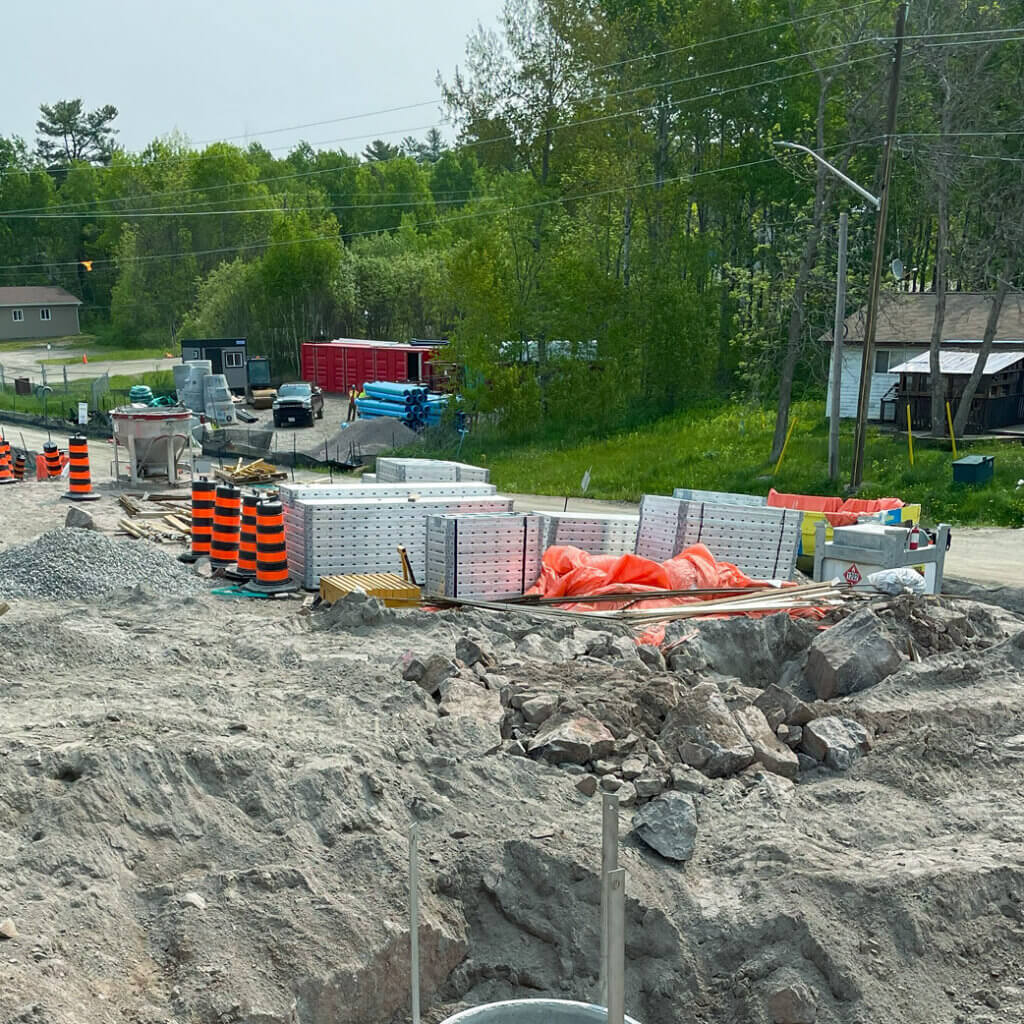
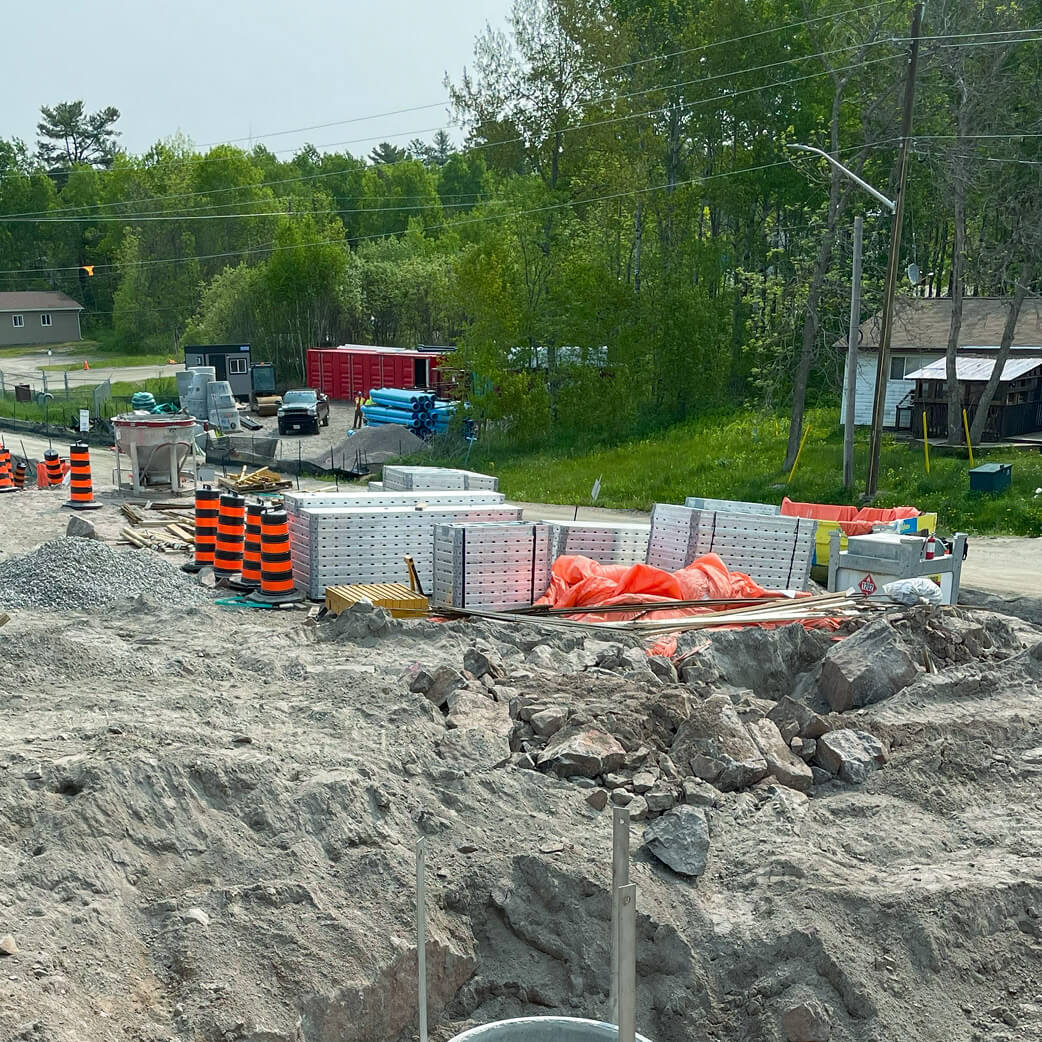
Rowland Concrete Services Ltd. took on the concrete work at Magnetawan, and the site presented its problem before a single form was set. The plant sits on a rock shelf with almost no laydown area and no practical access for a large crane. On most wall systems, that combination pushes cost straight into lifting equipment rental, because panels heavy enough to require lifting equipment require it whether or not the site has room for it. Rowland is a long-standing EFCO customer, and the company first saw the RAPID CAST® wall forming system demonstrated at CONEXPO-CON/AGG in Las Vegas, then asked whether it could suit these conditions. It could, and Magnetawan became the first RAPID CAST® project in Ontario. EFCO supplied RAPID CAST® for the plant’s water-retaining walls.
How Did RAPID CAST® Take the Crane Off the Cost Sheet?
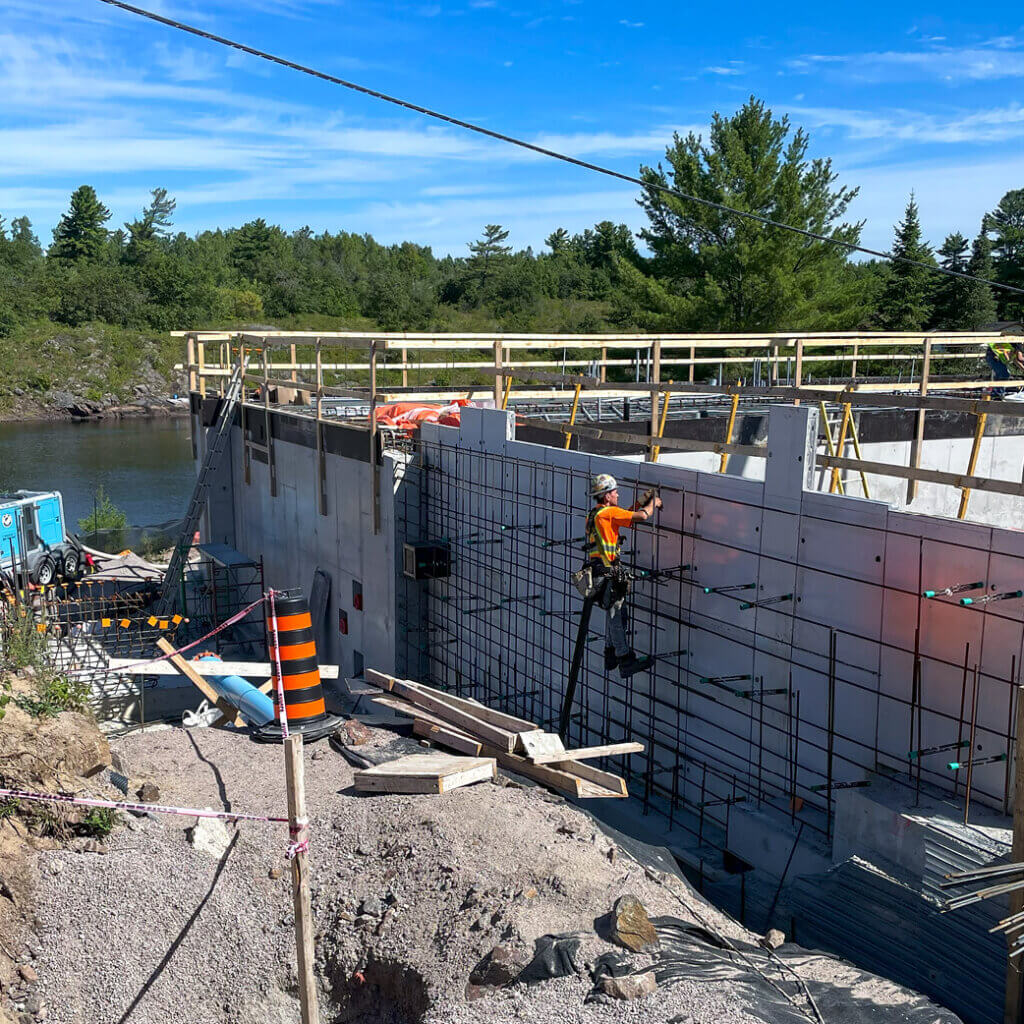
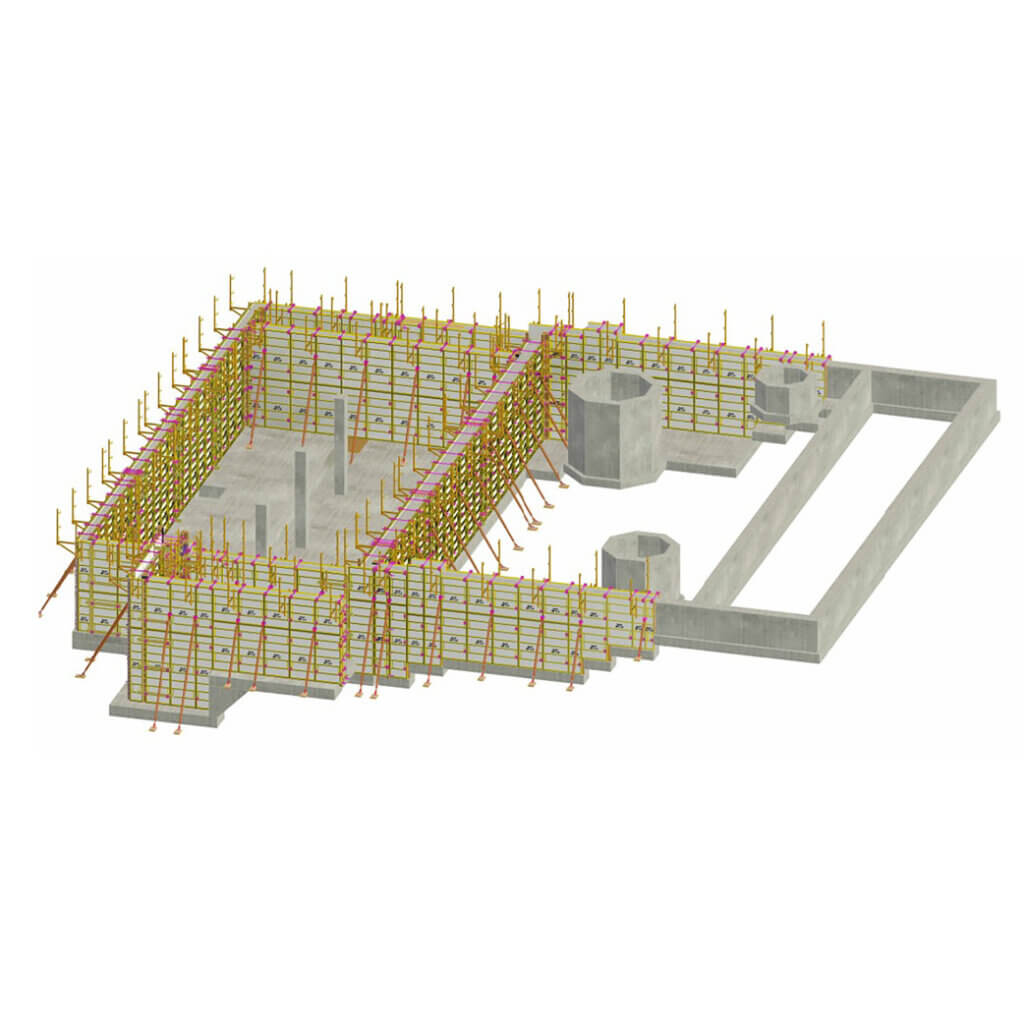
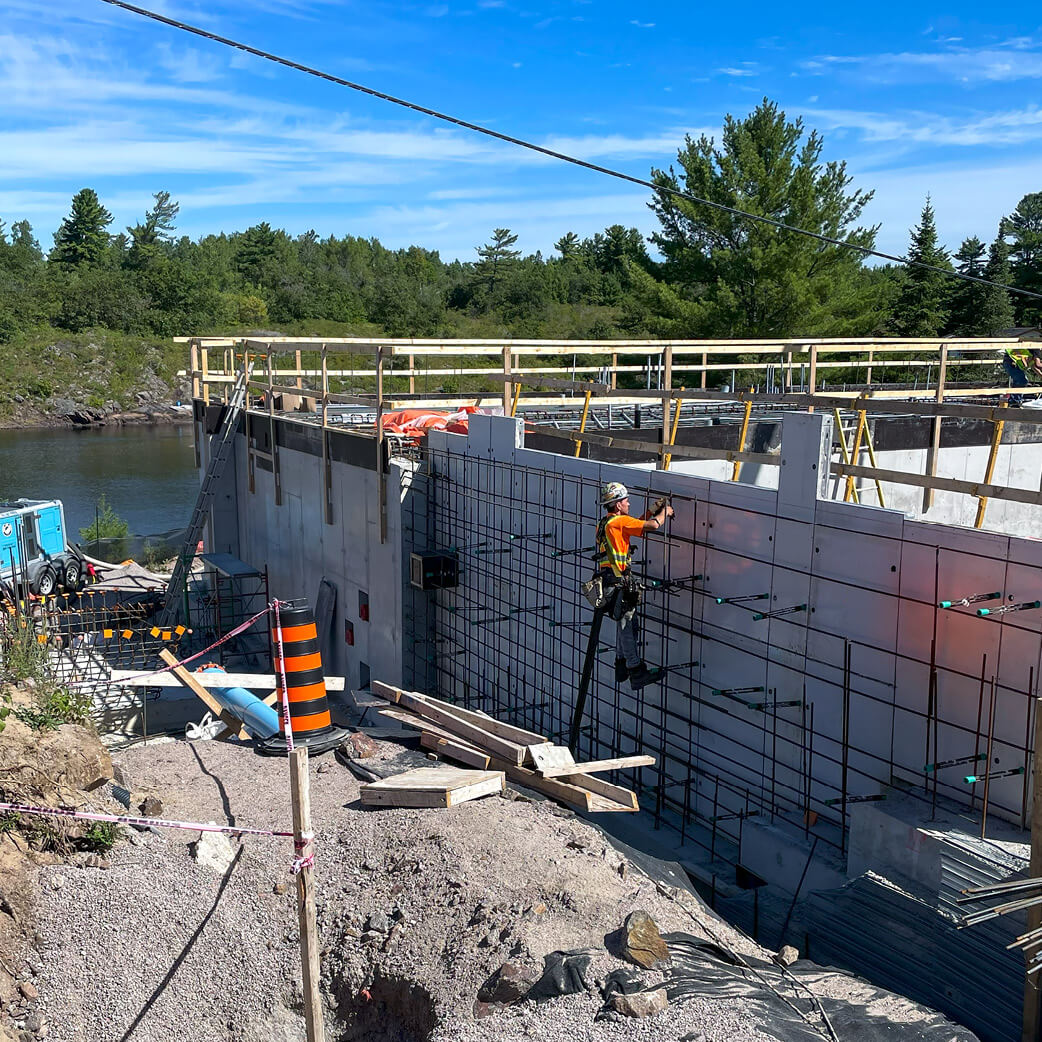
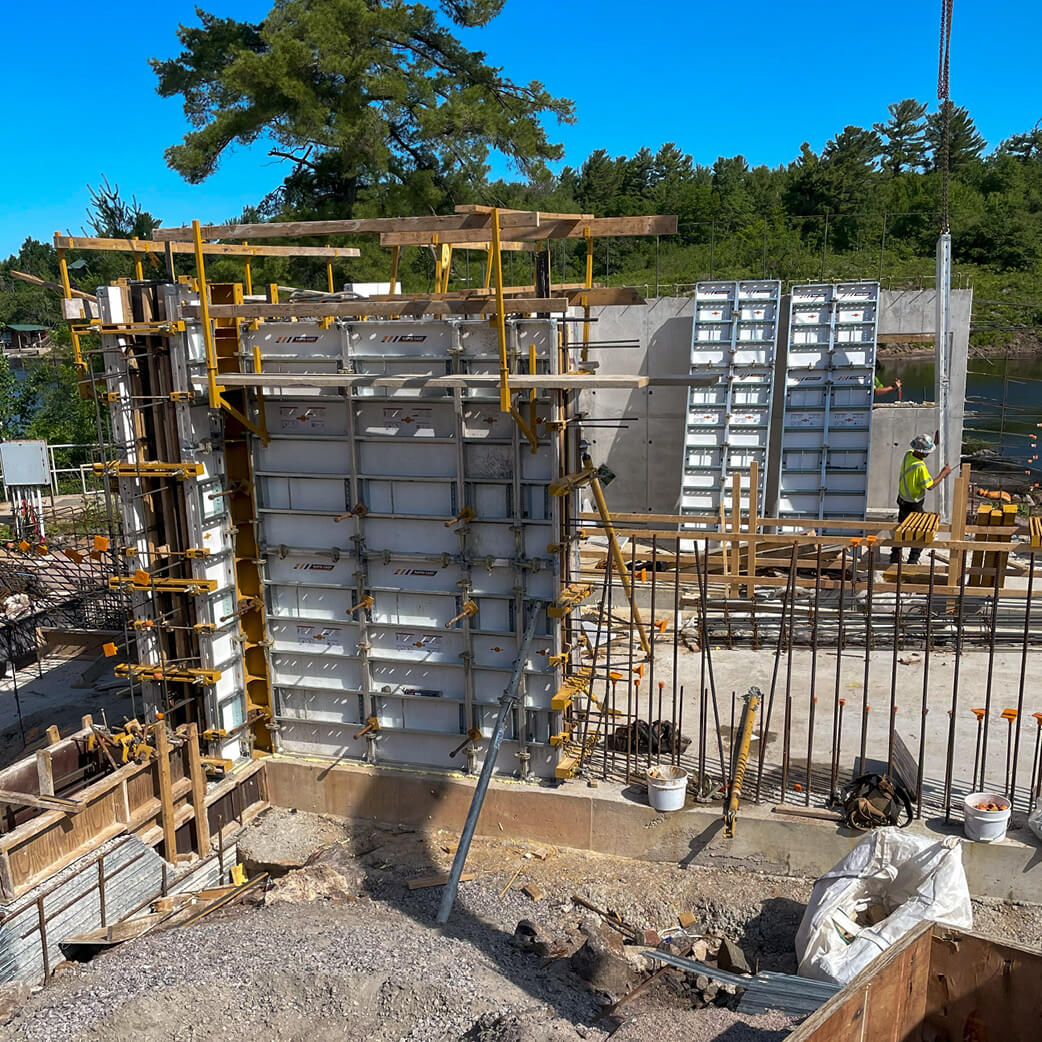
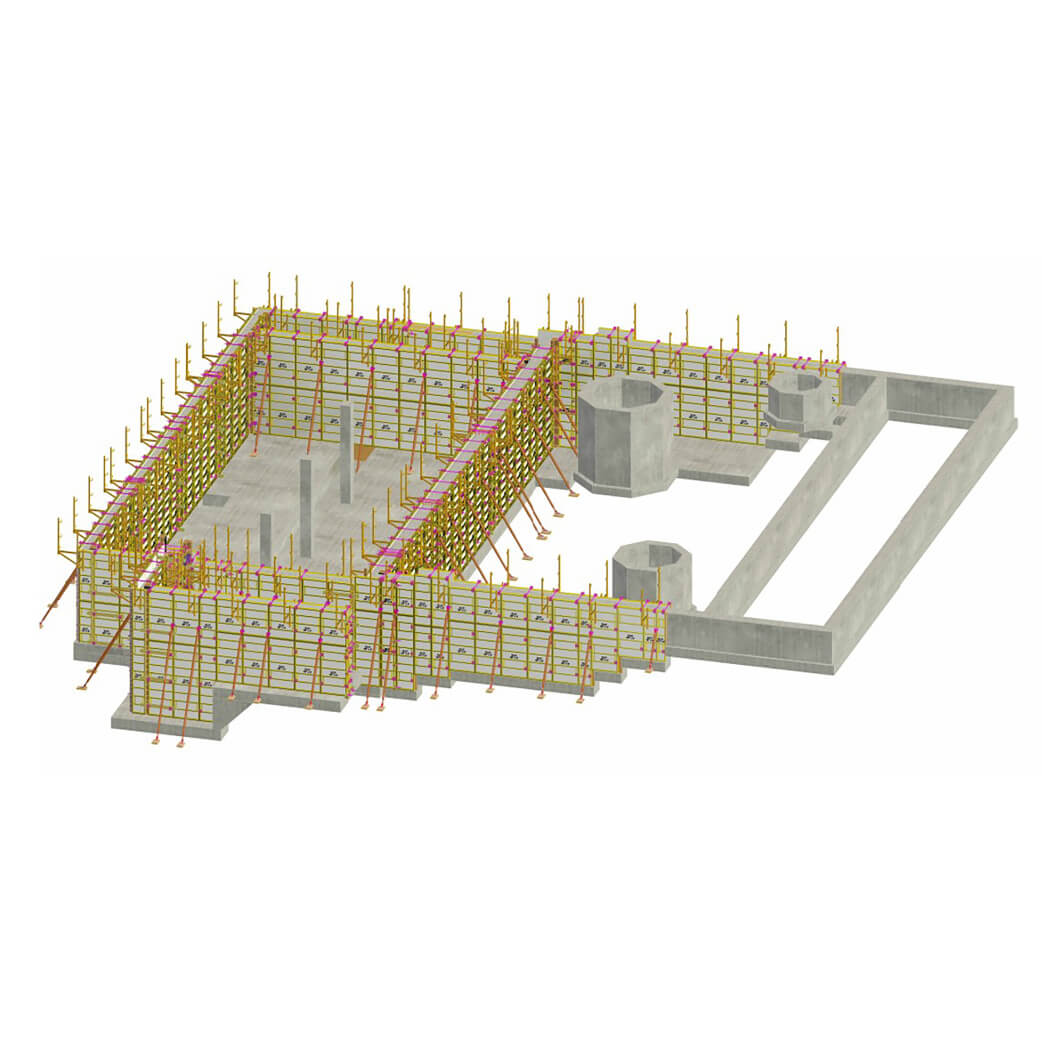
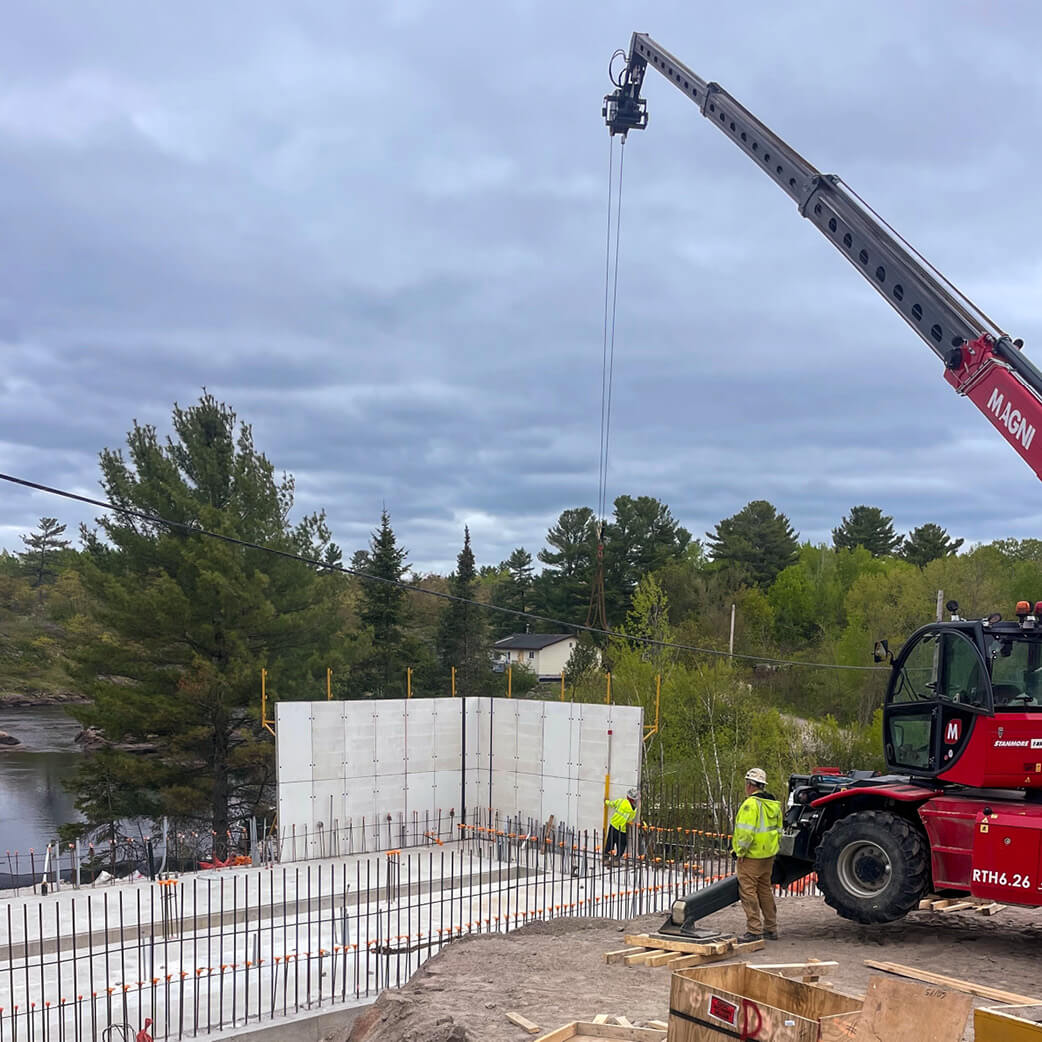
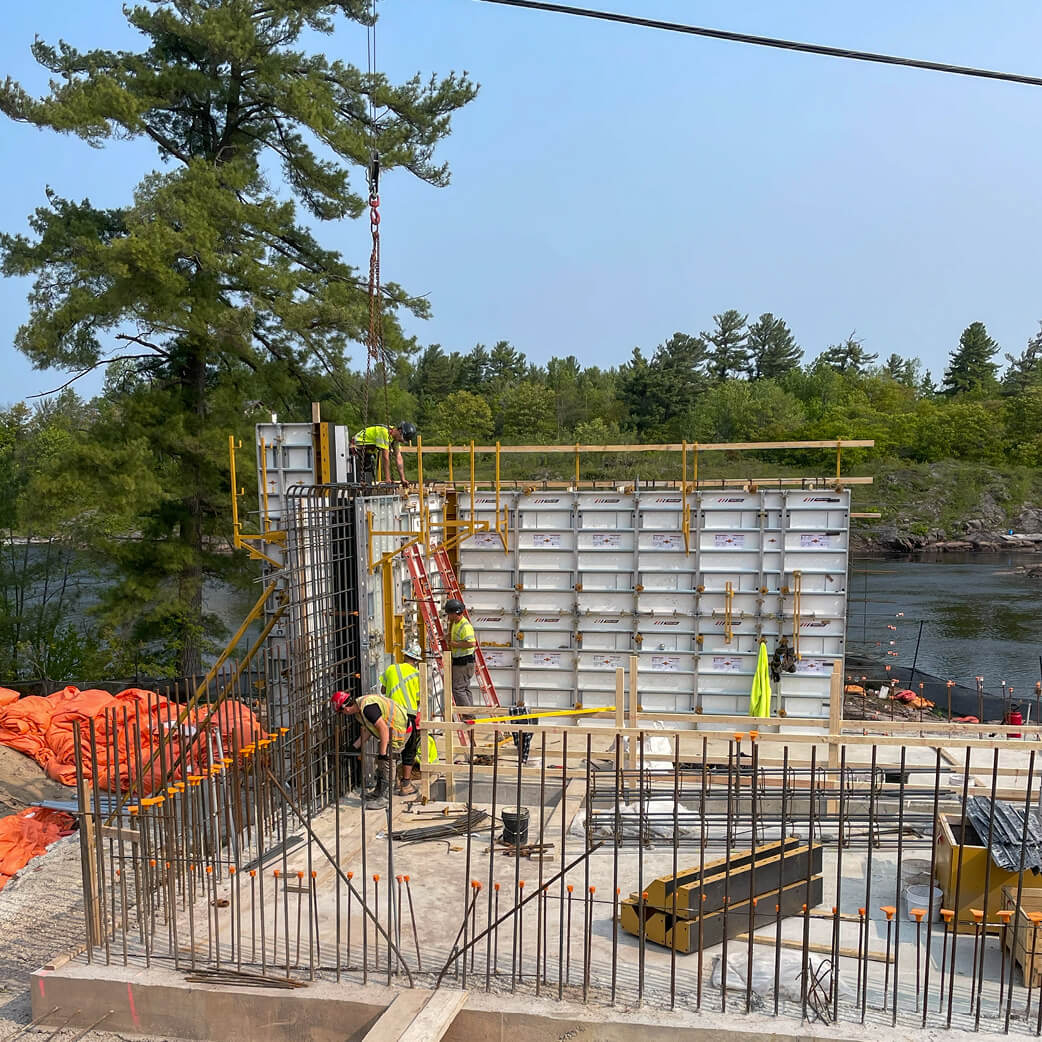
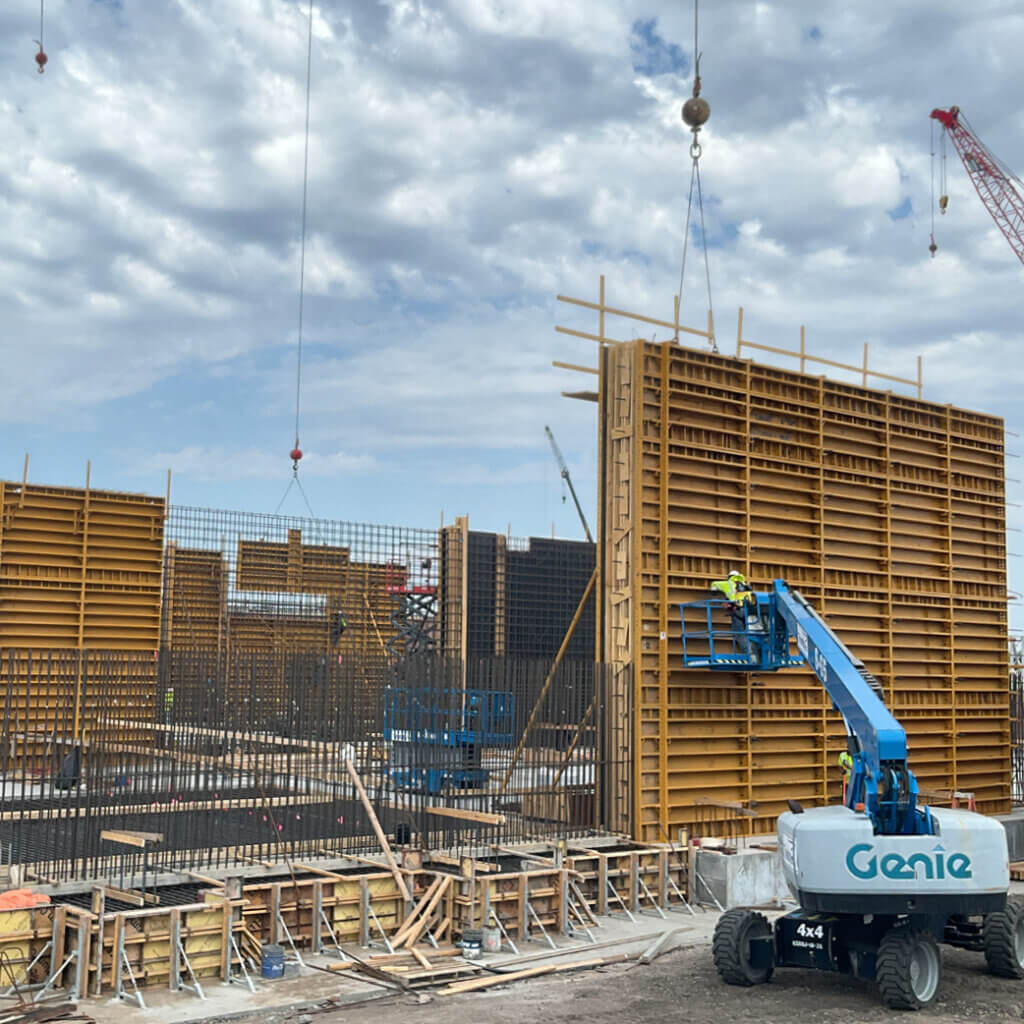
RAPID CAST® removed the crane from Rowland’s budget because its panels are light enough for a crew to build and set without one. The drawings lay the wall work out as six separate pours, and Rowland rented roughly 69 lin ft (21 m) of forms and cycled that one rental through all six to complete walls reaching a maximum height of 11 ft 10 in. (3,600 mm), formed with a two-high stack of 6 ft panels. Crews pre-built gangs in the narrow laydown area at the top of the site, then flew them down to the raft slab with the company’s own telehandler and hand-set the remaining panels from there. Because the plant is a water-retaining structure. No crane was rented for this job and none was needed, so that line came off Rowland’s estimate entirely.
How Were the Panels Deployed Around Penetrations, Corners, and Joints?
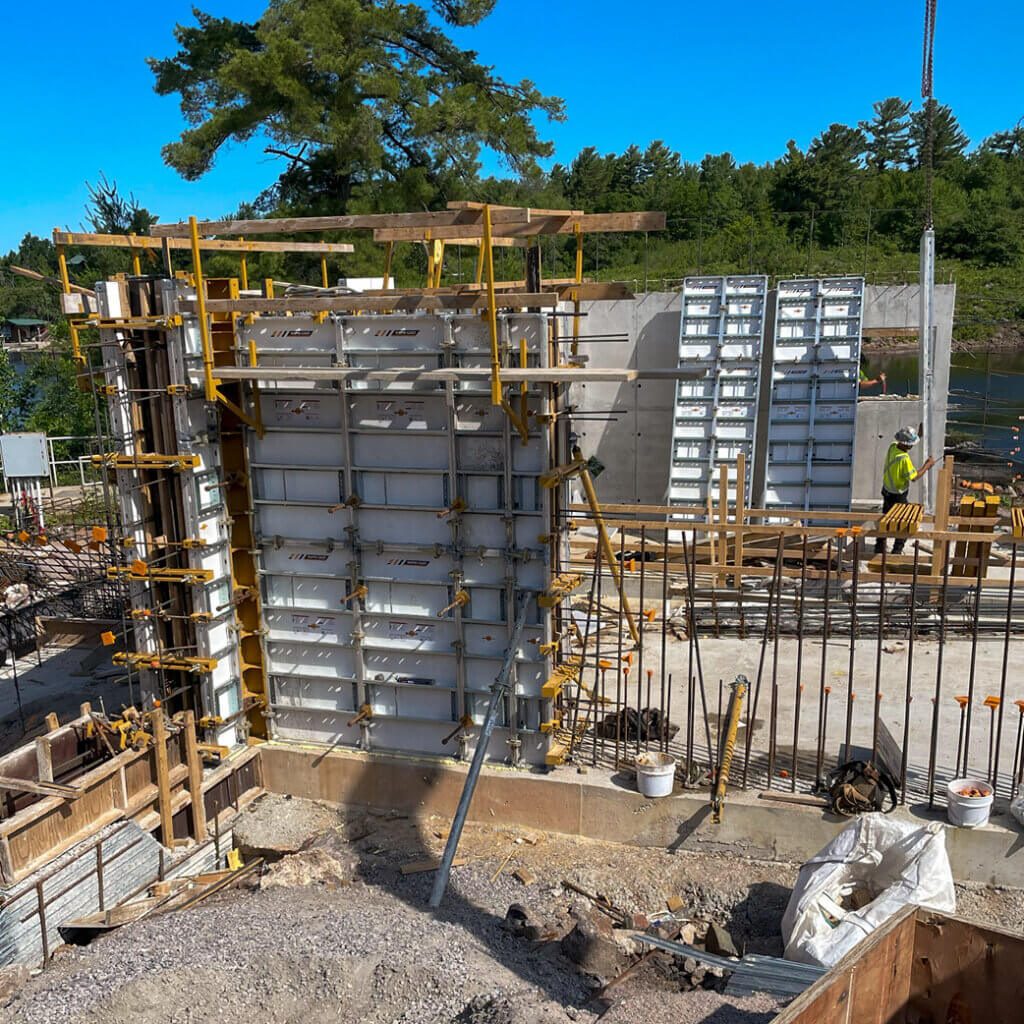
Treatment plant walls are rarely clean straight runs. These carried pipe and mechanical penetrations, intersecting walls, and changes in wall thickness. The drawings call out RAPID CAST® panels in 12 in., 18 in., 24 in., and 36 in. widths, and that range let the crew form tight to those conditions, so only the penetrations themselves needed timber blockouts. Panels were set both vertically and horizontally and stacked where pour lengths called for it, which put construction joints where the design wanted them rather than where the forms happened to end. At the inside corners, a rigid 10 in. x 10 in. (254 mm x 254 mm) corner ran to bulkhead beams on either side, so the crew stripped cleanly with no stripping fillers required and turned the forms for the next cycle without rework.
Super Service & Safety
Because this was the first RAPID CAST® job in the province, the EFCO field supervisor worked on site through the opening cycles alongside the crew until the system was running the way it should, backed by territory sales, engineering, drafting, and distribution. Behind that support sat a professional engineer (PE) stamped engineering package. The RAPID CAST® tie-off rods also serve as single-person fall arrest anchor points tested to ANSI Z359.18-2020, Type D, so the crew’s fall protection was designed into the formwork. That is the reason a crew new to the system picked it up quickly enough to hold schedule on a site that left no margin for a slow start.
Why Rowland Concrete Services Chose EFCO
Rowland Concrete Services chose EFCO because EFCO was a great partner in solving for what the project needed. Normally a large rented crane would be required when the site is constrained by a rock shelf and a laydown area barely wide enough to build a gang.
RAPID CAST® let the crew do the work with the machinery already on site. Taking the crane out removed a full line item from the estimate.
That’s Lowest In-Place Concrete Cost (LIPCC) as contractors actually experience it. Not the lowest number on the rental sheet, but the lowest total cost of putting concrete in place once labor, equipment, and schedule are added together.
Several things turned a difficult site into a routine six-cycle wall program: the panel layout that solved the penetrations, the drafting that put it on paper, the engineering that stood behind a water-retaining structure, and the field supervisor that worked beside the crew through the first cycles.
EFCO recommended the system the conditions called for. Rowland’s response has been the clearest endorsement available: the company has run RAPID CAST® on every project since, with several more jobs contracted.
“The lighter panels let our own people build gangs by hand, without a crane or other equipment, and reach further when we did set gangs. With the range of panel sizes, it was easier to form around pipe and mechanical penetrations, intersecting walls, and changes in wall thickness.”
-Mike Rowland, President, Rowland Concrete Services Ltd.
Rowland Concrete Services LTD.
Mike Rowland, President / Project Manager
Jon Rowland, Vice President / Superintendent
Alex Hamilton, Foreman
John Robinson Sr., Estimator / Project Coordinator
EFCO Formwork Specialists – Georgetown
Derek Downey, Territory Manager
Matt Poirier, Engineering
Paolo Baricas, Drafter
Richard Wilder, Field Supervisor
Project Photos
Check Out Our Most Recent Utilities & Water Treatment Formwork & Shoring Projects
Trusted Formwork Partner
Why Trust Anyone Else?
We are ready to assist you in finding the best forming and shoring solutions for your construction projects.
