

I-285 / I-20 West Interchange | Atlanta, Georgia
Easing Atlanta’s Worst Bottleneck: Building the West Interchange Over Live Traffic, One Suspended Cap at a Time
Atlanta, Georgia
Atlanta’s I-285 / I-20 West Interchange Being Rebuilt
The American Transportation Research Institute ranked the junction of Interstate 20 and the I-285 loop the tenth-worst truck bottleneck in the nation in 2025. The I-285/I-20 West Interchange project is rebuilding it from the ground up. It converts the interchange’s left-hand exits to conventional right-hand ones, using new flyover ramps and collector-distributor roads, and straightens the alignments along the way. Drivers no longer have to cut across lanes to catch a left exit at the last second.
The work spans 19 bridges across Fulton and Cobb counties, including three large flyovers and several tunnels, and it ranks among the largest efforts in Georgia’s Major Mobility Investment Program. When the interchange reaches substantial completion in 2030, the payoff for the region will show up in safer merges, shorter commutes, and more reliable trips for the freight that moves through metro Atlanta every day.
A Formwork Partner Before the Design Was Set
On a design-build project, the concrete geometry itself can be shaped around reusable forms, and that decision has to happen early. C.W. Matthews Contracting Co., Inc., based in Marietta, Georgia, has a long history of civil construction across the state, and it was awarded the structural concrete work on the West Interchange. The firm came to the job already knowing what EFCO could do.
EFCO and C.W. Matthews go back more than two decades, as far back as the 17th Street Bridge in the early 2000s, and EFCO’s reputation in bridge formwork made it a natural fit here. Soon after the award, the two shaped the concrete geometry around reusable forms. Those talks set the equipment list: high-strength PLATE GIRDER® columns, SUPER PLATE GIRDER® hammerhead caps, custom support brackets, E-BEAM & SUPER STUD® rebar templates, and E-BEAM® deck-overhang forming. All of it had to work in some of the tightest spaces on the corridor. Formwork engineering services applied at the design stage, rather than after the drawings are stamped, are what made the reuse possible at all.
Forming a Pier Cap Over Live Interstate Traffic
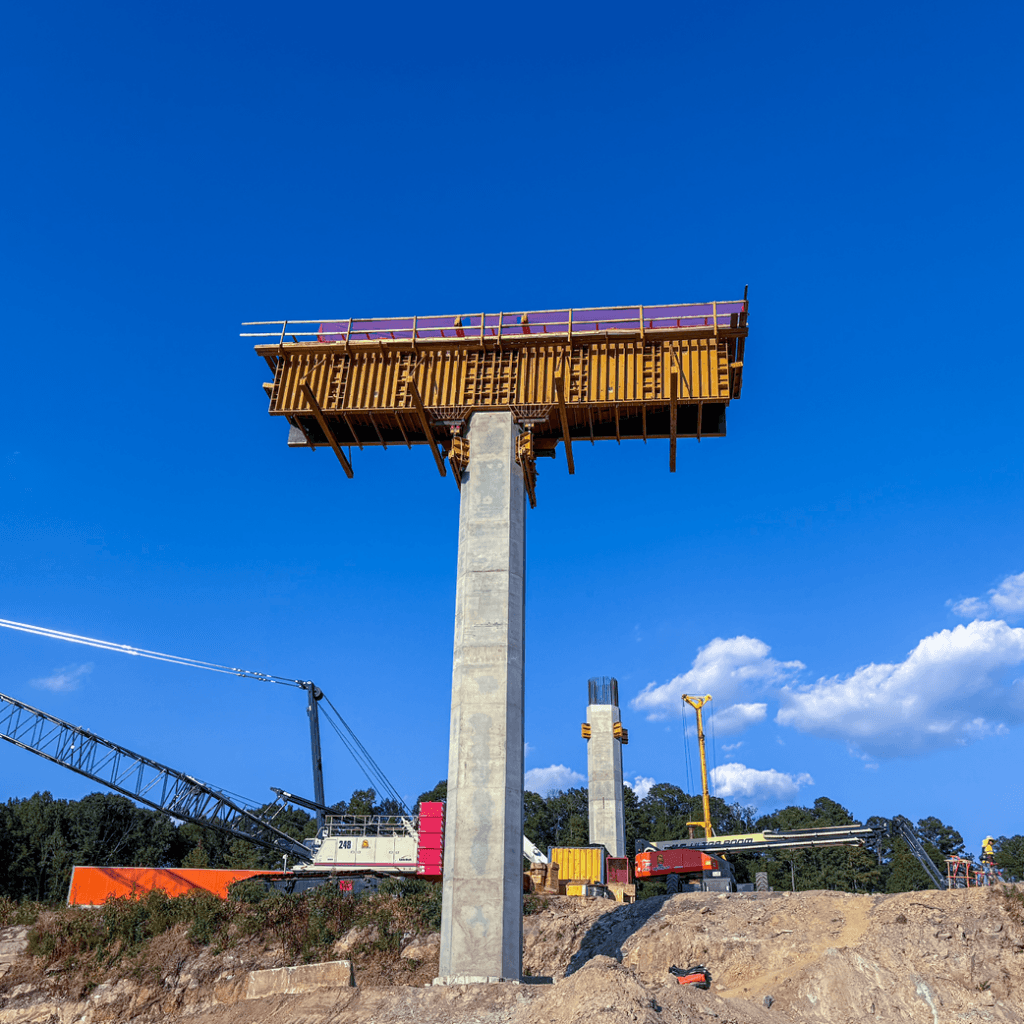
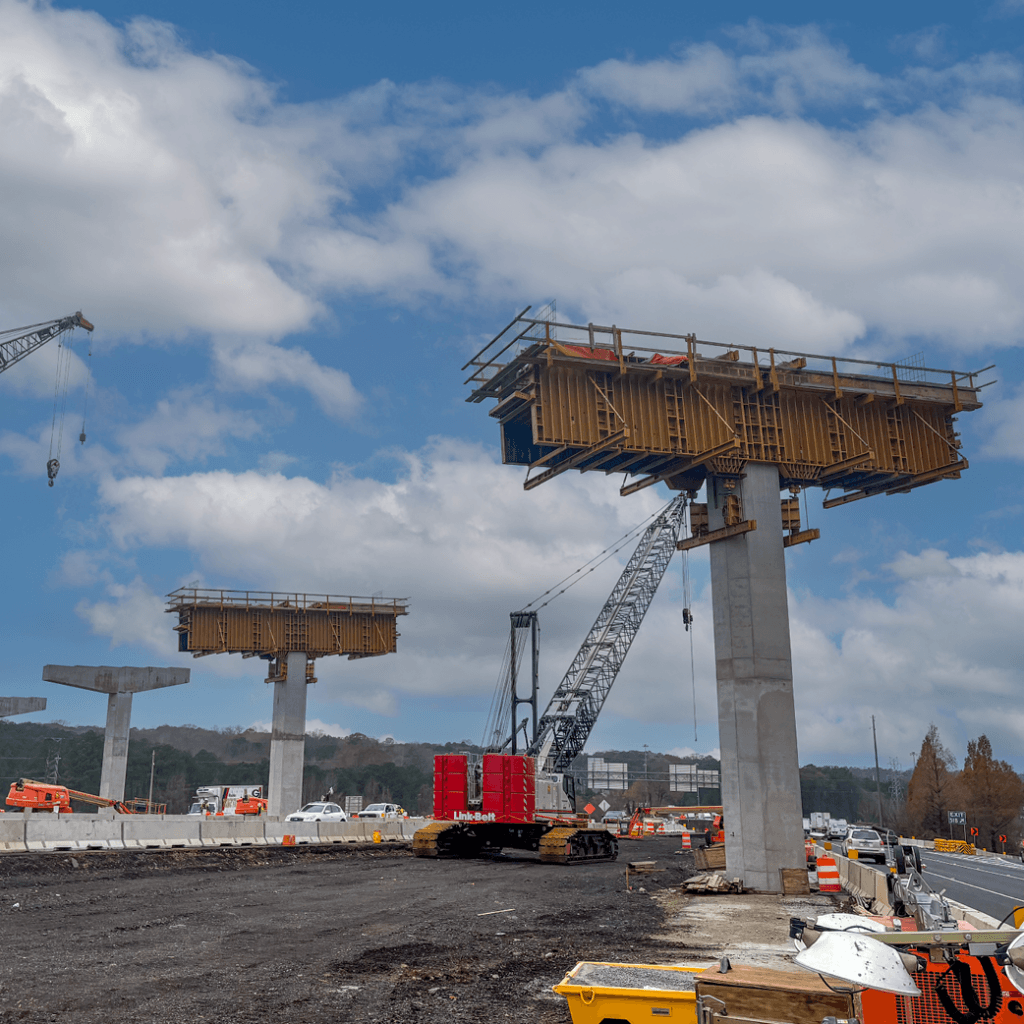
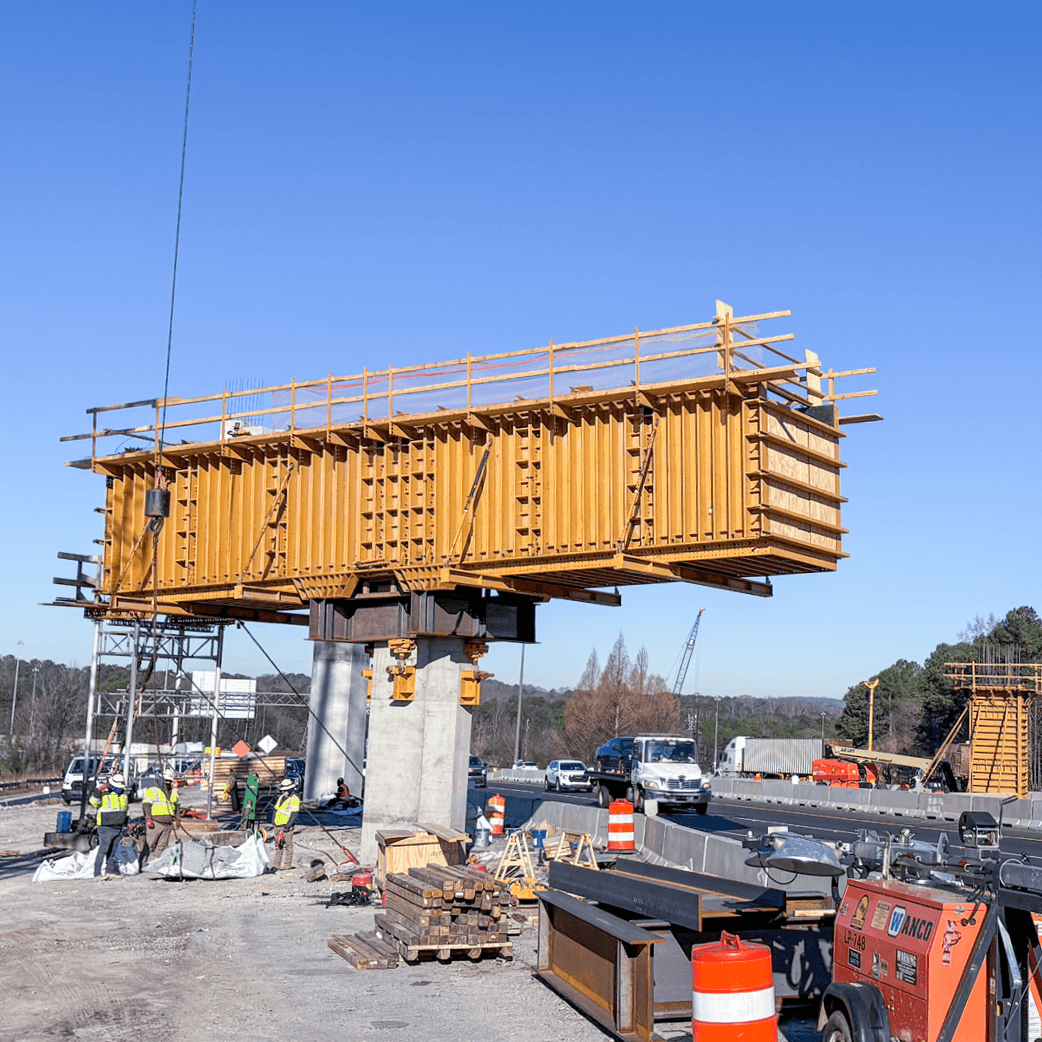
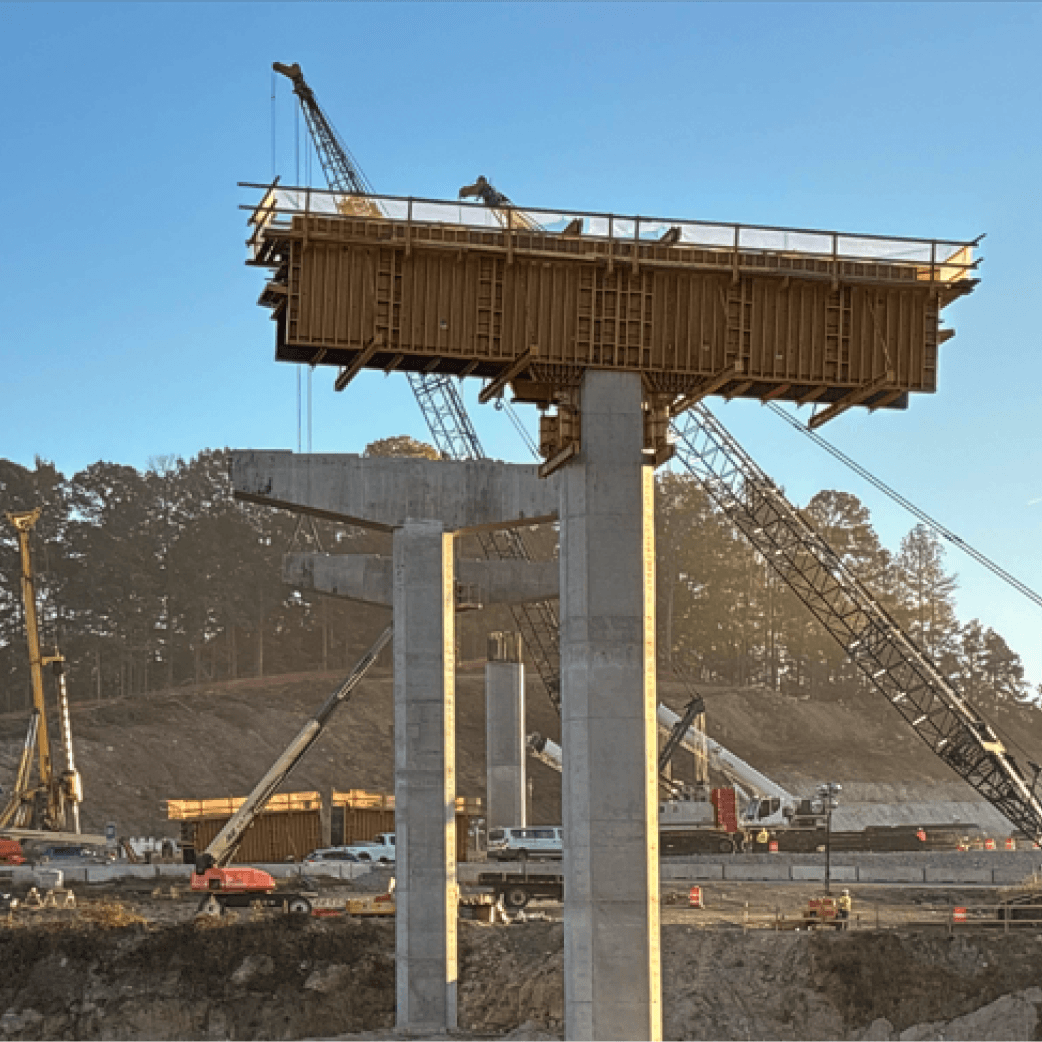
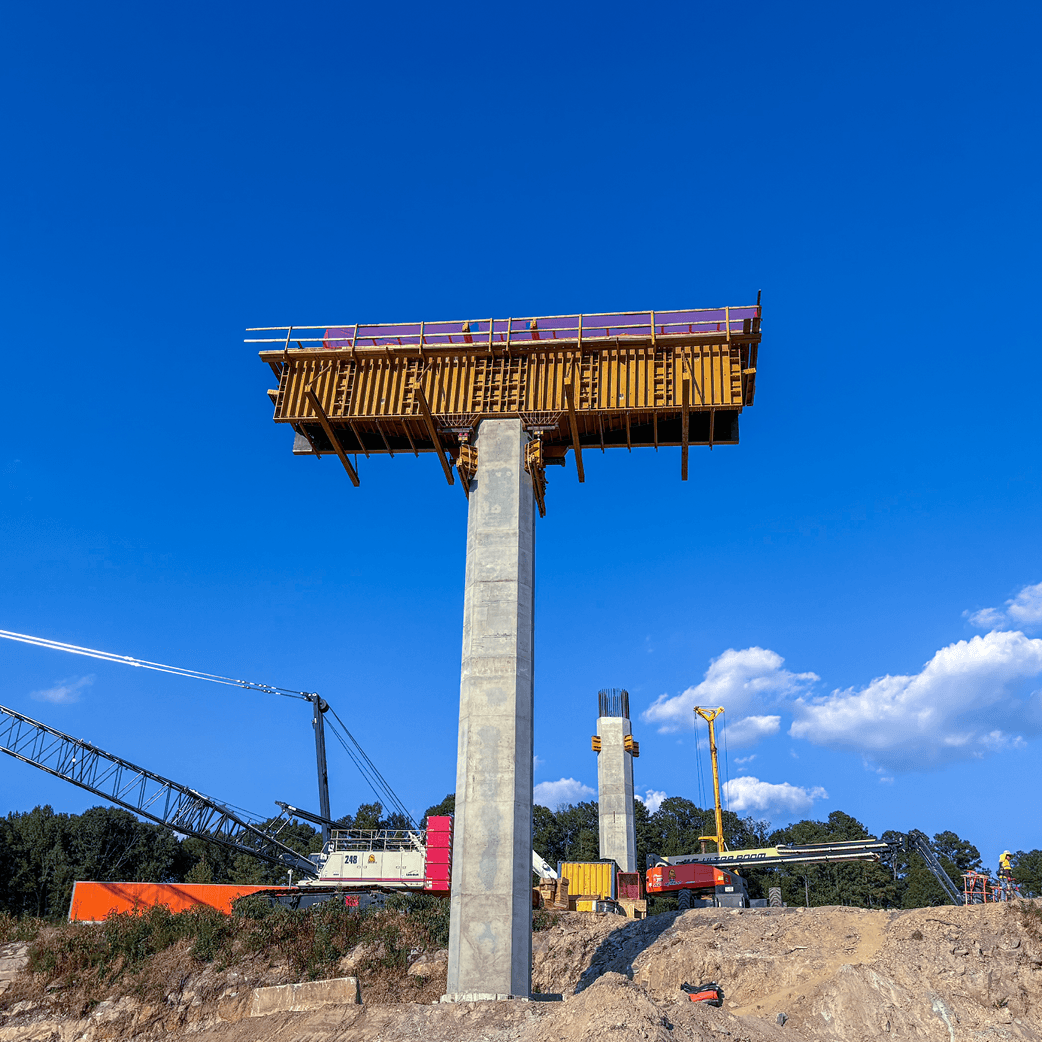
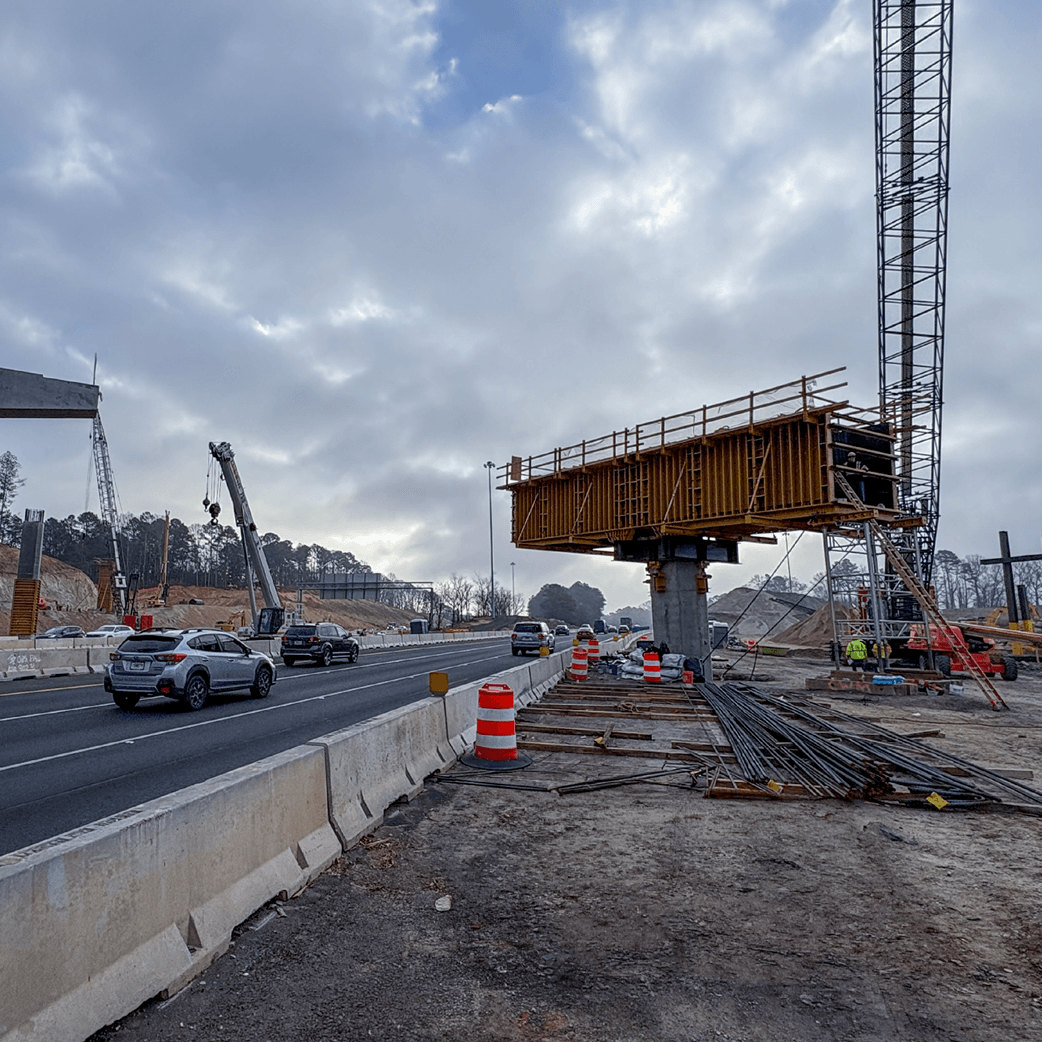
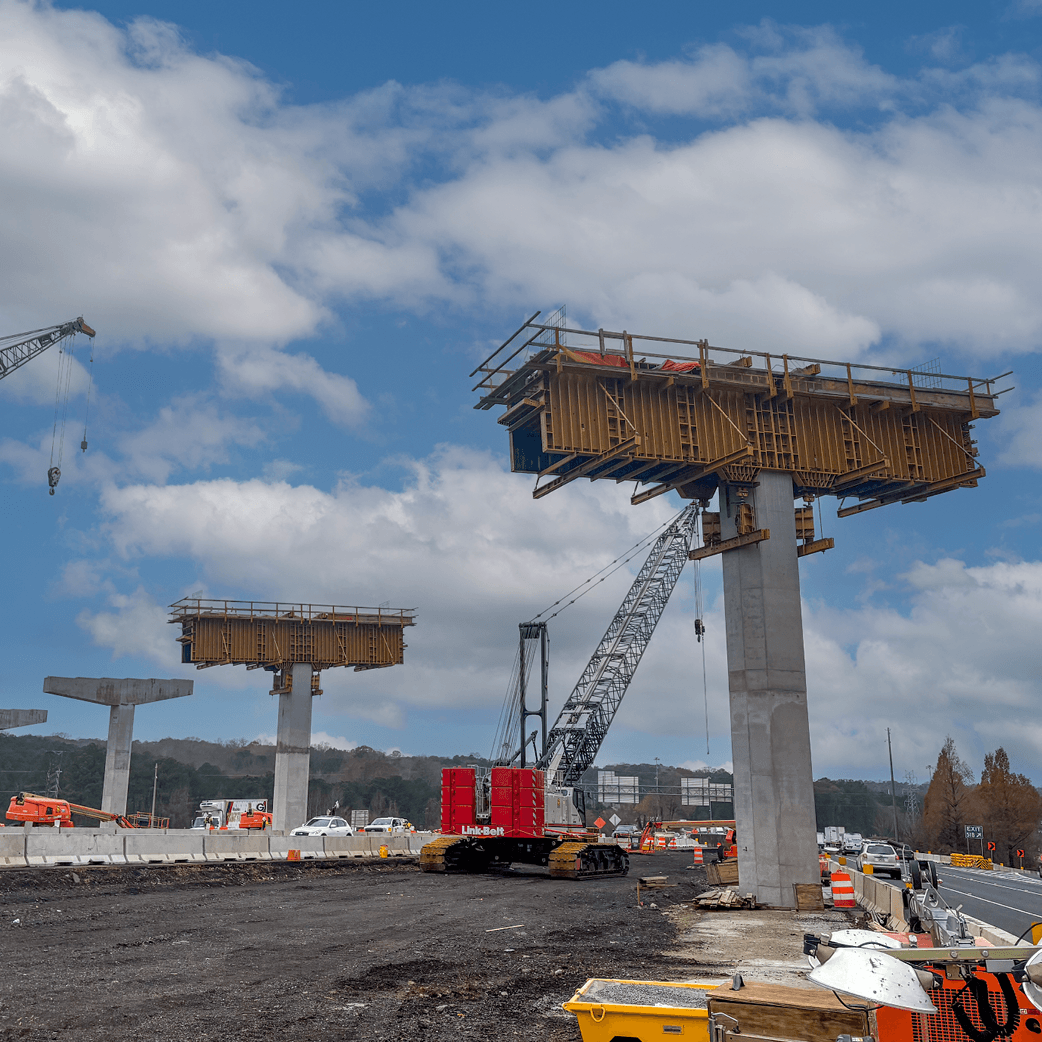
Most of the hammerhead caps on this interchange sit tucked into medians or reach out over lanes that never stopped carrying traffic, which ruled out the shoring towers and guying a bridge crew would normally set. Instead, the cap formwork hangs from custom SB4 support brackets that carry the load into the column, so nothing lands on the roadway.
Each cap form runs 52 feet (15.8 m) long and stands 10 feet (3 m) tall. Its soffit ranges from 5 to 6 feet (1.5 to 1.8 m) wide and is set at a superelevation of up to 6 percent. The brackets are rated at 140 kips (63,500 kg) each and are engineered to hold up to 560,000 pounds (254,000 kg) per cap.
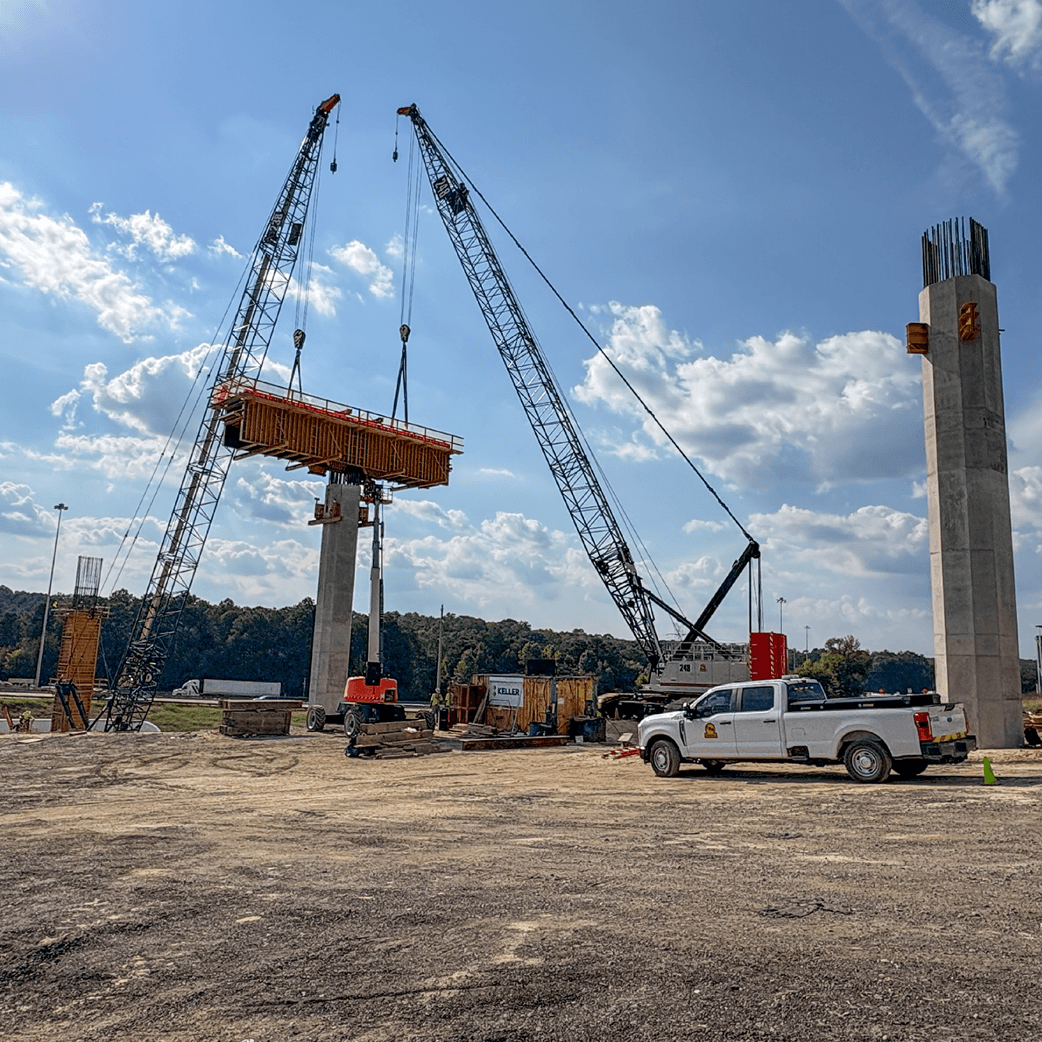
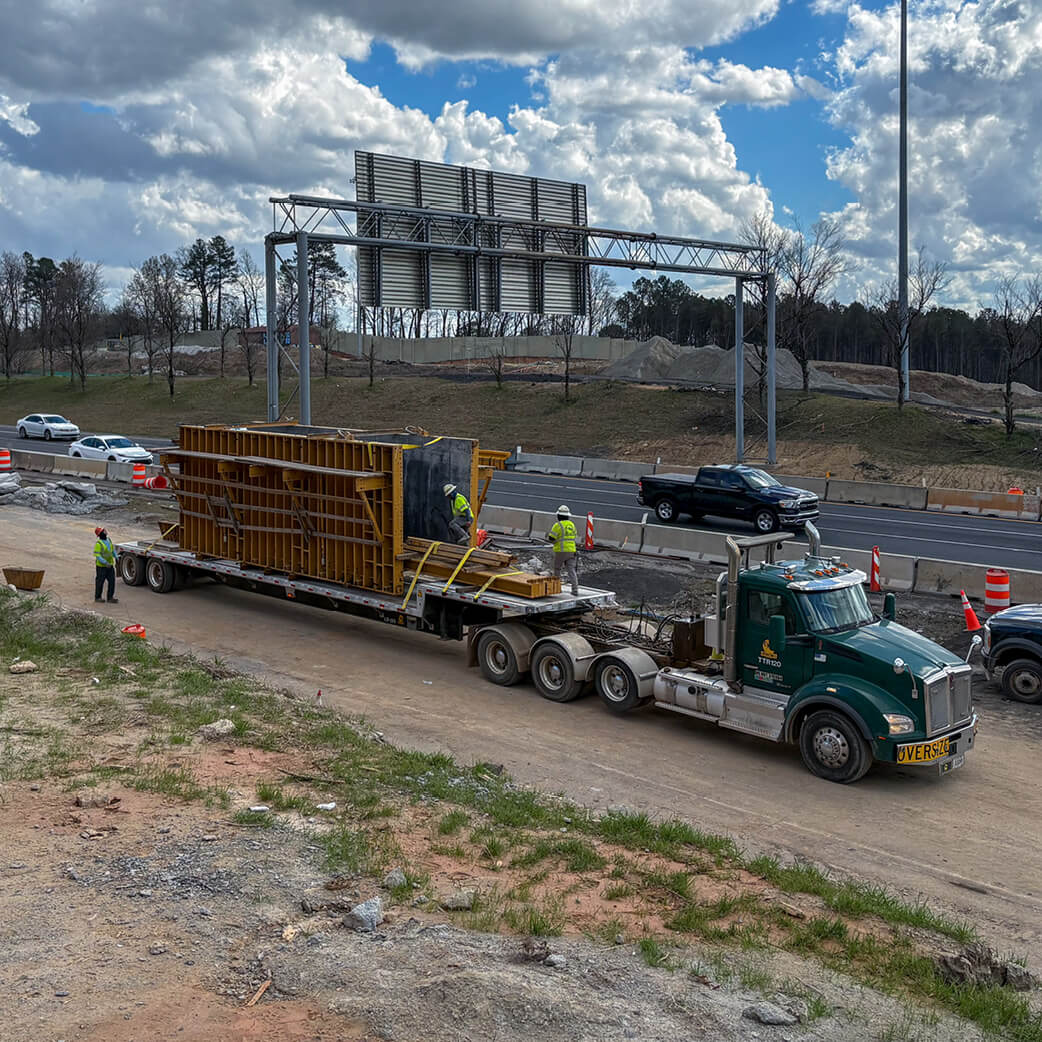
The forming cycle was lean. One crane pick set each cap with its rebar cage already inside. Two more cranes stripped the form into halves, and each half rode a flatbed to the next bent, even when the route meant driving miles down the highway and doubling back. With the forms suspended over the interstate, crews kept building while traffic flowed underneath, and the lanes stayed open the whole time.
Forming Three Column Sizes with One Set of Forms
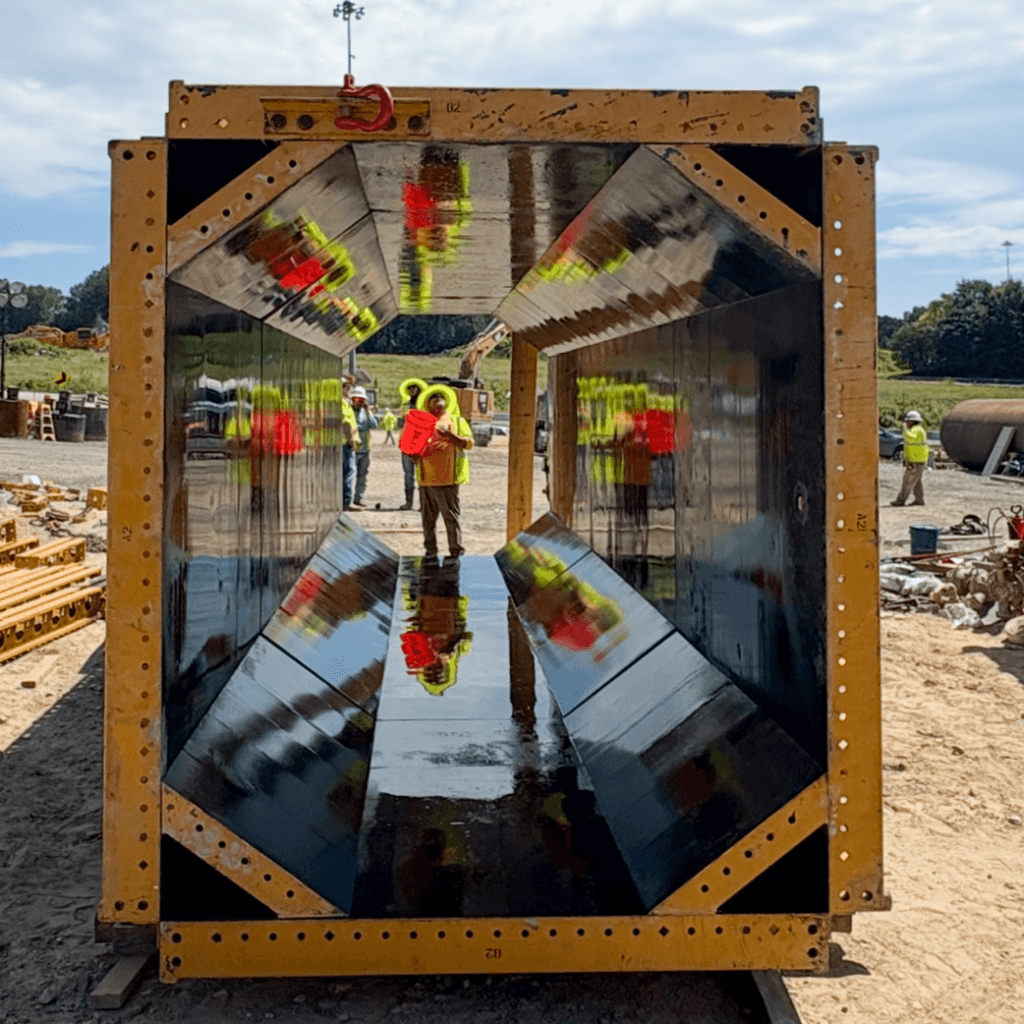
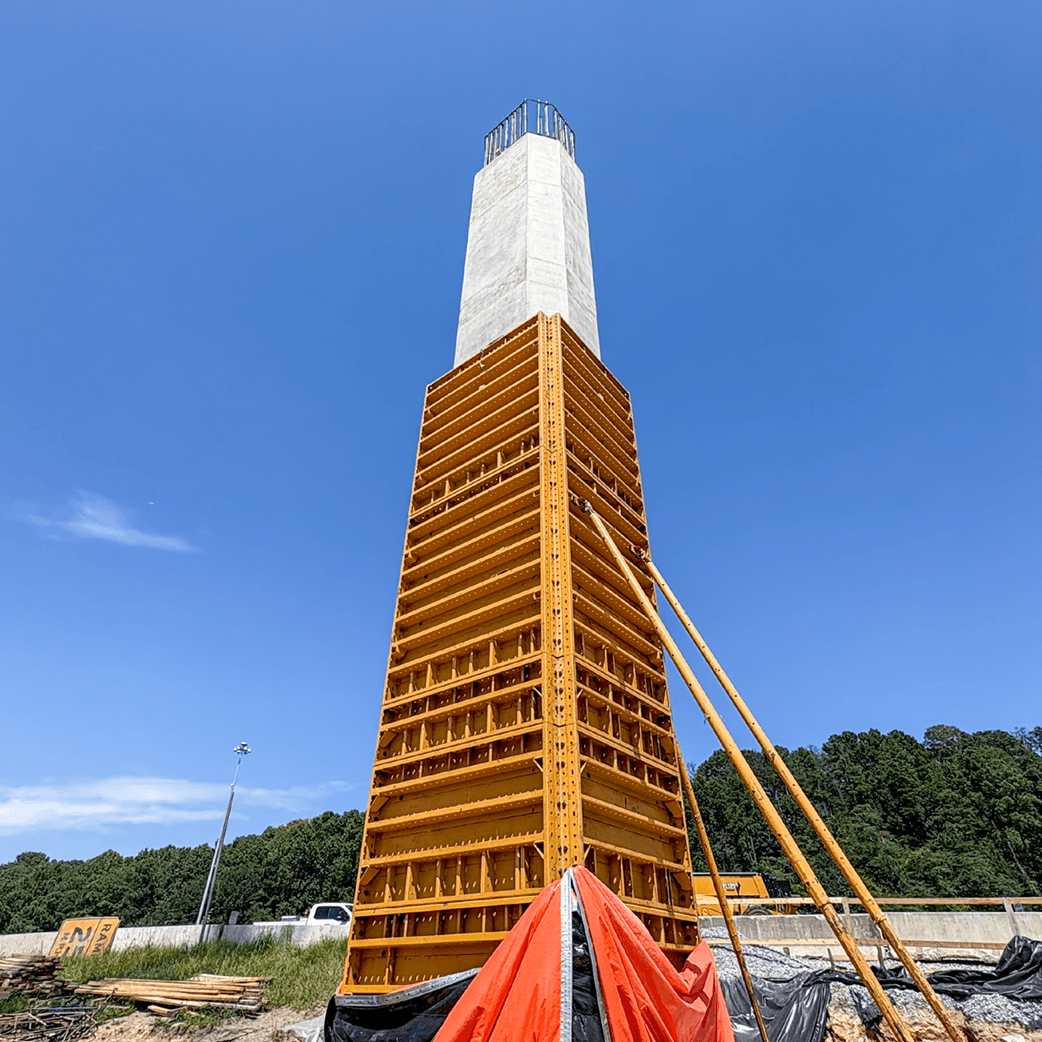
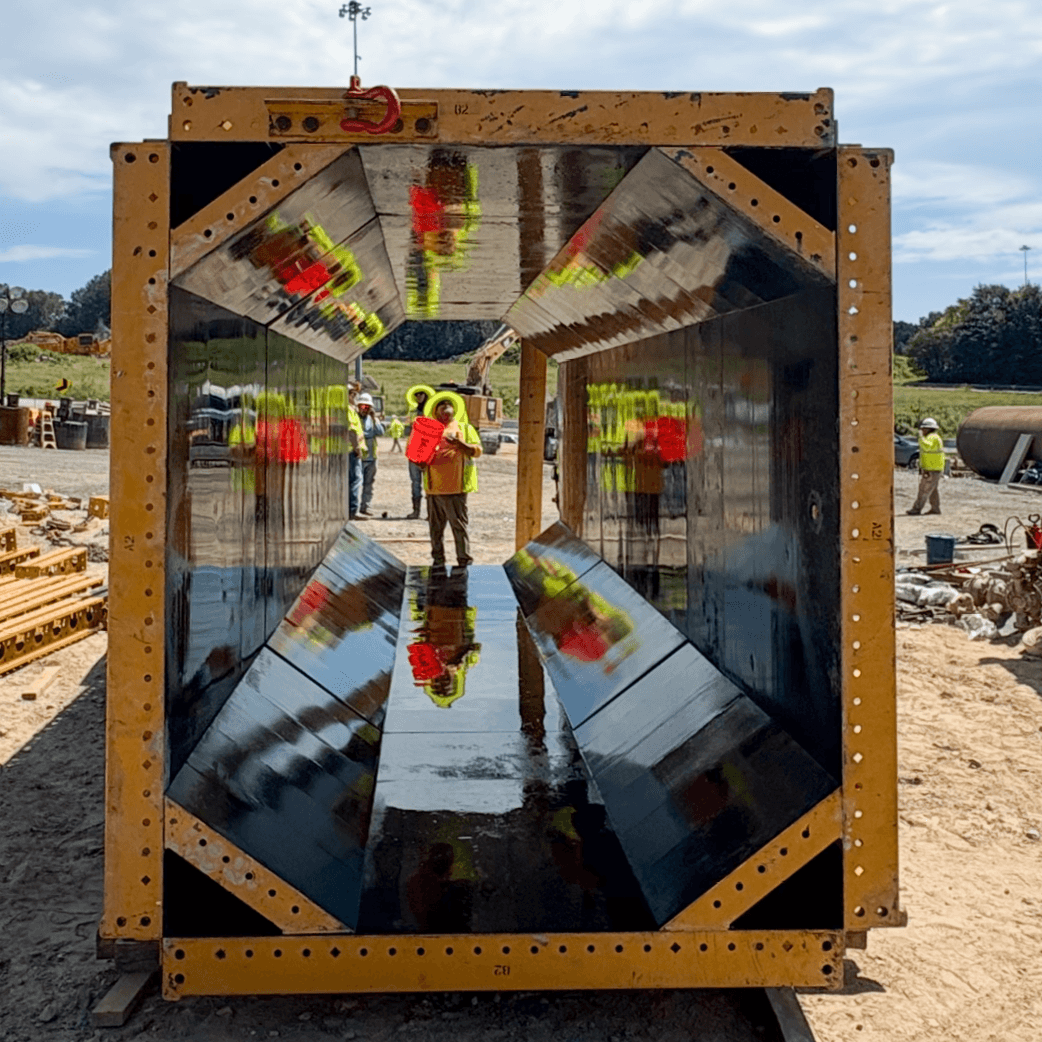
The interchange called for an octagonal shape, so EFCO started with a square PLATE GIRDER® form and fabricated custom fillets at the corners. EFCO supplied four column sets, each 30 feet (9.1 m) tall, the tallest pour the contractor preferred. The fillets allow each set to reconfigure to 5 x 6, 6 x 7, or 7 x 5 feet (1.5 x 1.8 m, 1.8 x 2.1 m, or 2.1 x 1.5 m), so four sets formed every column on the bridge instead of a separate form for each size.
The bolt-thru holes sat hidden behind the chamfer, so every column stripped to a clean face, and color-coded drawings let crews keep the sizes straight. The 7’ x 5’ Column posed a challenge: its chamfered corners were not parallel, so the standard support brackets would not seat flush with the concrete. EFCO’s engineers solved it with a custom shim plate, and the brackets bolted on as designed. Each column was poured in a single lift at 1,800 psf (86 kPa).
The same logic ran through the caps. The first flyover, WS-1, has 17 hammerhead caps. A second flyover, NW-3B, has nine more, shaped almost the same way. EFCO formed all 26 caps using just four cap form sets: two on WS-1 and two on NW-3B. That was possible because of the partnership formed early in the design process. EFCO and C.W. Matthews matched the soffit slopes across both flyovers, so a single pattern of drilled holes in the soffit panel fit every cap. For an estimator, that is the whole argument for engineered formwork in one number: 26 caps, four form sets.
Reducing Concrete Labor Costs on the West Interchange
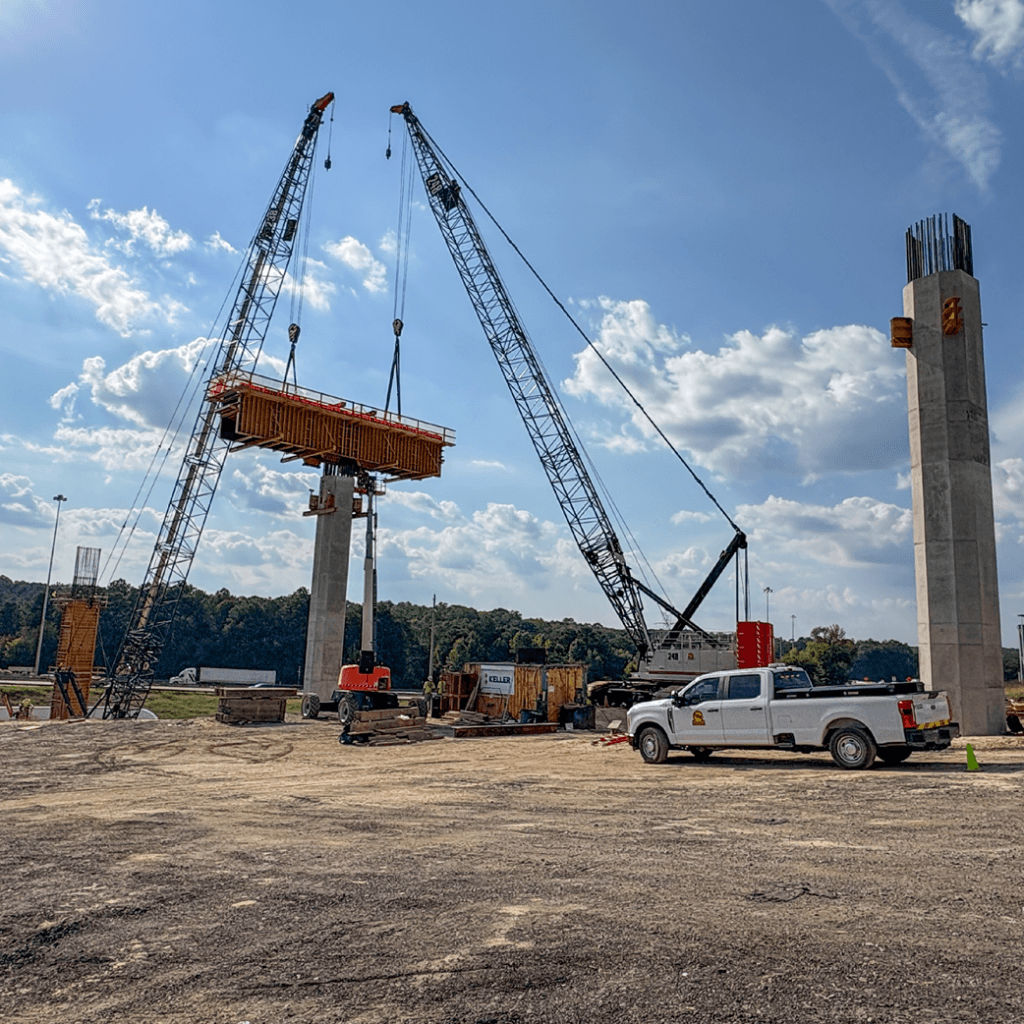
By moving work off the elevated deck and onto the ground, labor costs were reduced for this project. Since the caps had no post-tensioning, EFCO supplied a rebar template built with E-BEAM & SUPER STUD® equipment, so crews could tie the full rebar cages at ground level rather than high above live traffic.
For the lifts, EFCO provided its new LE-60 lifting eyes, with a capacity of 60,000 pounds (27,200 kg) each, which allow four-way picks and eliminate the need for spreader bars. At one set of bents, three larger inverted-T caps combined a wide 10-foot (3 m) soffit with the bridge’s superelevation. They were formed with the same equipment as the typical hammerhead caps, so minimal supplemental equipment was needed. E-BEAM® deck-overhang forming carried the same principle out to the deck edges.
Field service stayed close to the work throughout. EFCO reps were on site for the critical pours, answered questions on short notice, and ran a formwork erection and safety session for four of the contractor’s crews at the field office.
Why C.W. Matthews Chose EFCO
For C.W. Matthews, the West Interchange called for more than rented forms. The job needed a partner who would help get the concrete right before the first pour and then stand behind the equipment in the field. EFCO did both.
The early planning that squared up the soffit slopes and column fillets is what let a handful of form sets cover two flyovers, with a bigger one still to come. That reuse is the heart of how EFCO provided the Lowest In-Place Concrete Cost (LIPCC). The suspended clamp system kept the interstate open, the chamfer hid the bolt holes and left clean concrete behind, and a small number of custom shim plates kept the crew on standard hardware rather than one-off parts.
Behind all of it were EFCO people who showed up for the hard pours and trained the crews who ran the forms. On one of the busiest interchanges in the Southeast, that kind of support is what keeps a complex, traffic-bound build moving safely toward its 2030 finish, and it is what turns engineered formwork into real concrete construction cost savings.
C.W. Matthews Contracting Co.
Mark Dolan, Project Manager
Patrick Millican, Structures Manager
David Meece, General Superintendent
Alfredo DeJesus, Superintendent
Tony Visockis, Superintendent
Scott Zablan, Superintendent
Anthony Jacobsen, Project Engineer
Garrett Zamorano, Project Engineer
Jesus Alvarado, Foreman
Hunter Hollis, Foreman
Casey Prater, Foreman
EFCO Formwork Specialists – Atlanta
Barret Allen, Territory Manager
Reid Milford, Project Engineer 2
Sidney Dudley, Field Supervisor
Zach Tremblay, CAD Designer 2
A Contractor’s Perspective
Partnering with EFCO on I-285/I-20 West
The I-285 and I-20 West Interchange Improvement Project presented significant construction challenges, requiring complex bridge geometry, accelerated schedules, heavy traffic impacts, and demanding safety expectations. Success depended on having a formwork partner that could provide more than equipment—it required responsive engineering, dependable field support, and innovative solutions throughout construction.
EFCO consistently delivered on all three.
From the earliest stages of the project, EFCO worked alongside our team to develop hammer head cap formwork systems that addressed the unique demands of the interchange. Their engineering staff was readily available to adapt designs as field conditions evolved, helping us maintain production while minimizing delays and avoiding costly redesigns.
The versatility of EFCO’s forming systems allowed us to efficiently construct bridge caps and columns, the most critical structural elements while maintaining the quality and finish required on a project of this magnitude.
What truly differentiated EFCO was their commitment to partnership. Their field representatives remained engaged throughout construction, providing technical guidance, resolving issues quickly, and ensuring our crews could work safely and efficiently. That level of responsiveness helped us keep the project moving despite the complexities of working within one of the busiest transportation corridors in the Southeast.
EFCO’s combination of engineered solutions, reliable equipment, and exceptional customer service contributed directly to improved productivity, enhanced safety, and schedule performance. Rather than simply supplying formwork, EFCO became an extension of our project team.
On a project as demanding as the I-285 and I-20 West Interchange, having a trusted engineering partner made a measurable difference. We would confidently recommend EFCO to any contractor undertaking complex bridge or heavy civil infrastructure projects.
EFCO wasn’t just our formwork supplier—they were a true project partner. They were instrumental in keeping high production rates, great quality of finished in-place concrete, and keeping budgets minimized. Their responsiveness, innovative solutions, problem-solving, and commitment to our project’s success helped us safely deliver one of Georgia’s most complex interchange improvements.
David Meece
General Superintendent
C.W. Matthews Contracting Co., Inc.
Project Photos
Check Out Our Most Recent Bridge & Highway Formwork Projects


Frequently Asked Questions
Trusted Formwork Partner
Why Trust Anyone Else?
We are ready to assist you in finding the best forming and shoring solutions for your construction projects.
